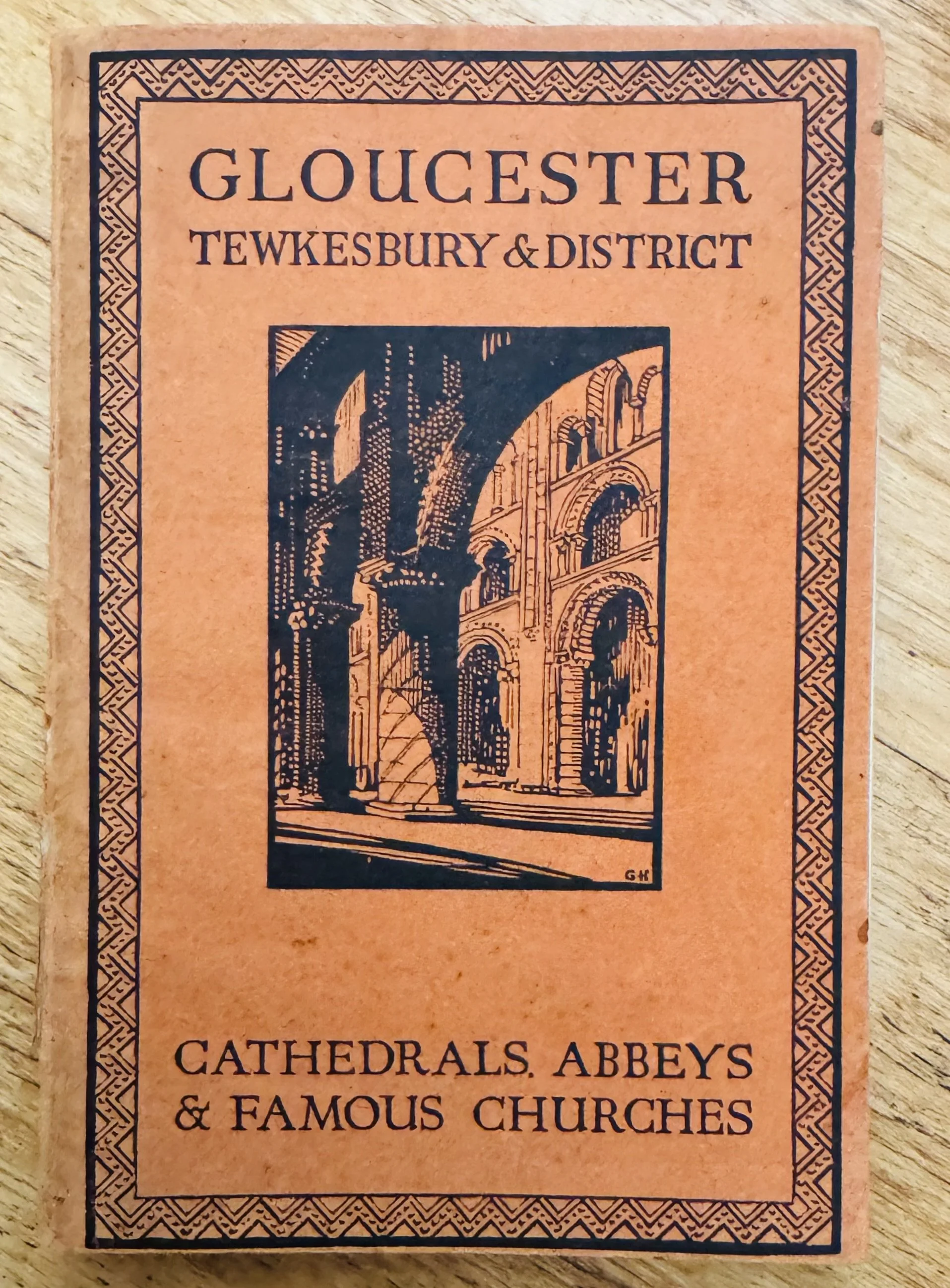
GLOUCESTER TEWKESBURY & DISTRICT by Edward Foord (1925)

EXTRACT
GLOUCESTER TEWKESBURY & DISTRICT by Edward Foord (1925)
October 2025
I have my favourite authors and their books. Quite a few actually.
I like the security of word in print. There are passages of prose, poetry, history and politics, every subject, where we like to take five, sit down quietly with the phone on silent, and read for pleasure.
No matter how many times I read a favourite extract, I find something new every time.
If I watch a favourite drama, I love to trace the movement of the plot, the subtle exchanges, the throw-away remark that on first seeing it, falls into the realm of chatter, enabling the person to become comfortable in the surroundings being presented.
Subsequent viewings, we then see a whole string of expertly connected clues, and quite a few that are there but very obscure.
Edward Foord was commissioned to write this delightful booklet in 1925, two years before my parents were born. Hence, I have an unexpected window onto their world, a world that was as state of the art then to that generation as today is to the 21st generation. And this is so in every century.
This Extract is the Editor’s Preface written by Gordon Home in 1925
when the booklet was first published in
London & Toronto
by
J M Dent & Sons Ltd
10-13 Bedford Street LONDON WC2
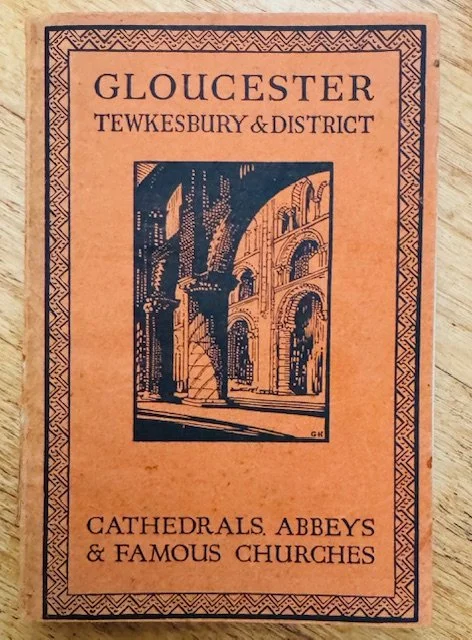
Booklet’s Front Cover
EXTRACT
EDITOR’S PREFACE
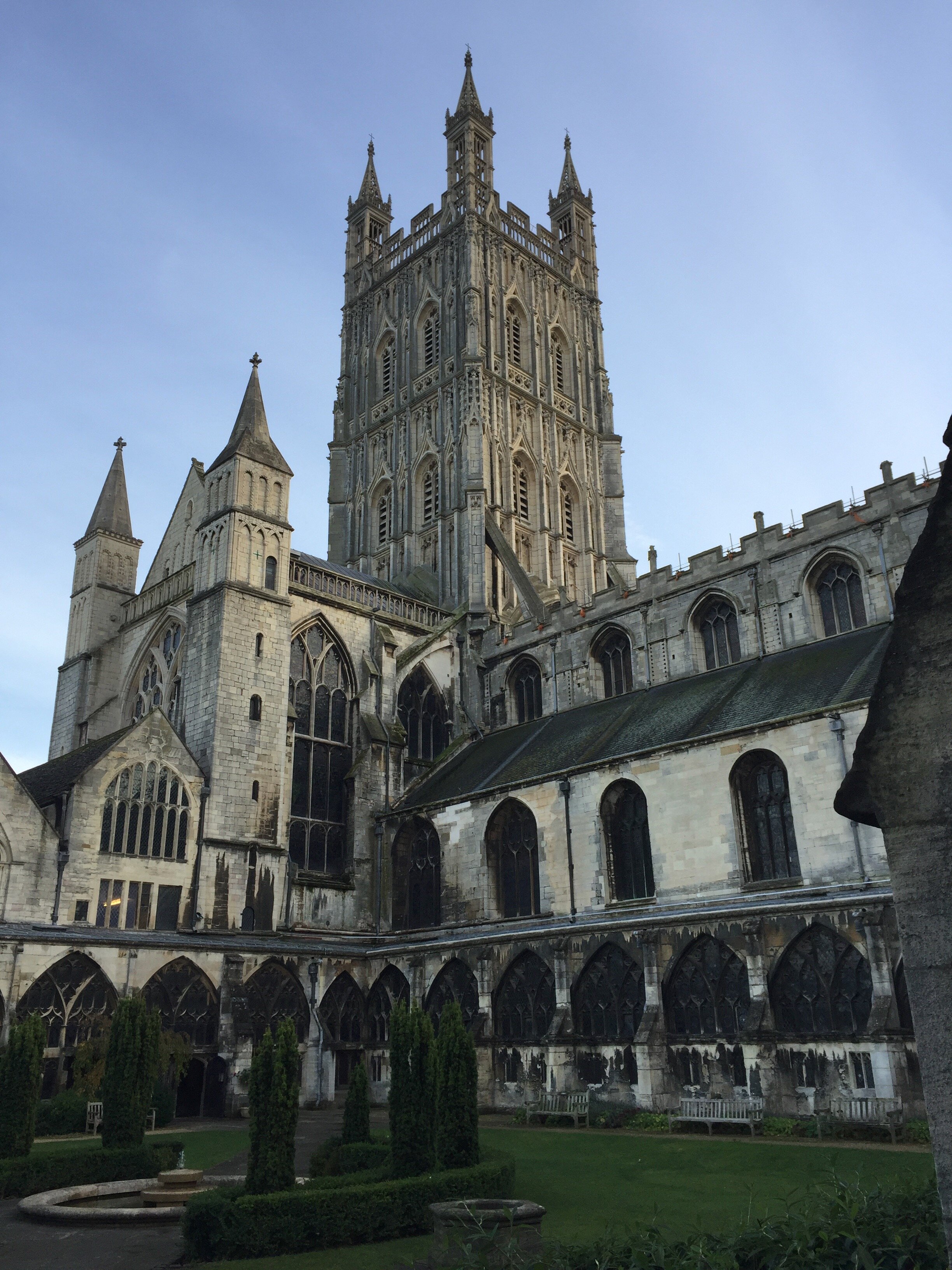
Gloucester cathedral and its splendid neighbour the abbey-church of Tewksbury (see Note 1), together with some famous Gloucestershire churches not far away, all the subject of this little work. It is one of a series of volumes devoted to cathedrals, abbeys and famous churches. They are planned to be small enough for the pocket and yet sufficiently large to give out a quick scope for illustration and very readable size of type.
The aim which I have set before me in these books is the presentation, as far as possible, of the personal aspects of the great buildings.
I have encouraged the authors to write as fully as space permits of the men who raised the vast structures, and of those whose energy and enterprise brought about the successive remodellings and reconstructions which have left to the present age these inspiring works, of what I do not hesitate to call the noblest and most all-embracing forms of art.
The men and women whose monuments or unmarked burial-places are in the cathedrals, have as far as possible being presented as human beings. While the architecture is fully described, the authors have been urged not to try the patience of those to whom architectural terminology conveys comparatively little. It is my hope, therefore, that the books will stimulate the interest of many who have in the past found the great churches of England a ponderous and uninspiring subject.
As a single example of the emphasis which Mr Foord, the author of this volume has placed upon the human side of Gloucester cathedral, I would draw attention to his stirring account of General Thackwell's brilliant achievement at Sobraon, where he ordered his cavalry to attack a heavily-entrenched position, and actually succeeded in taking it. (See Note 2)
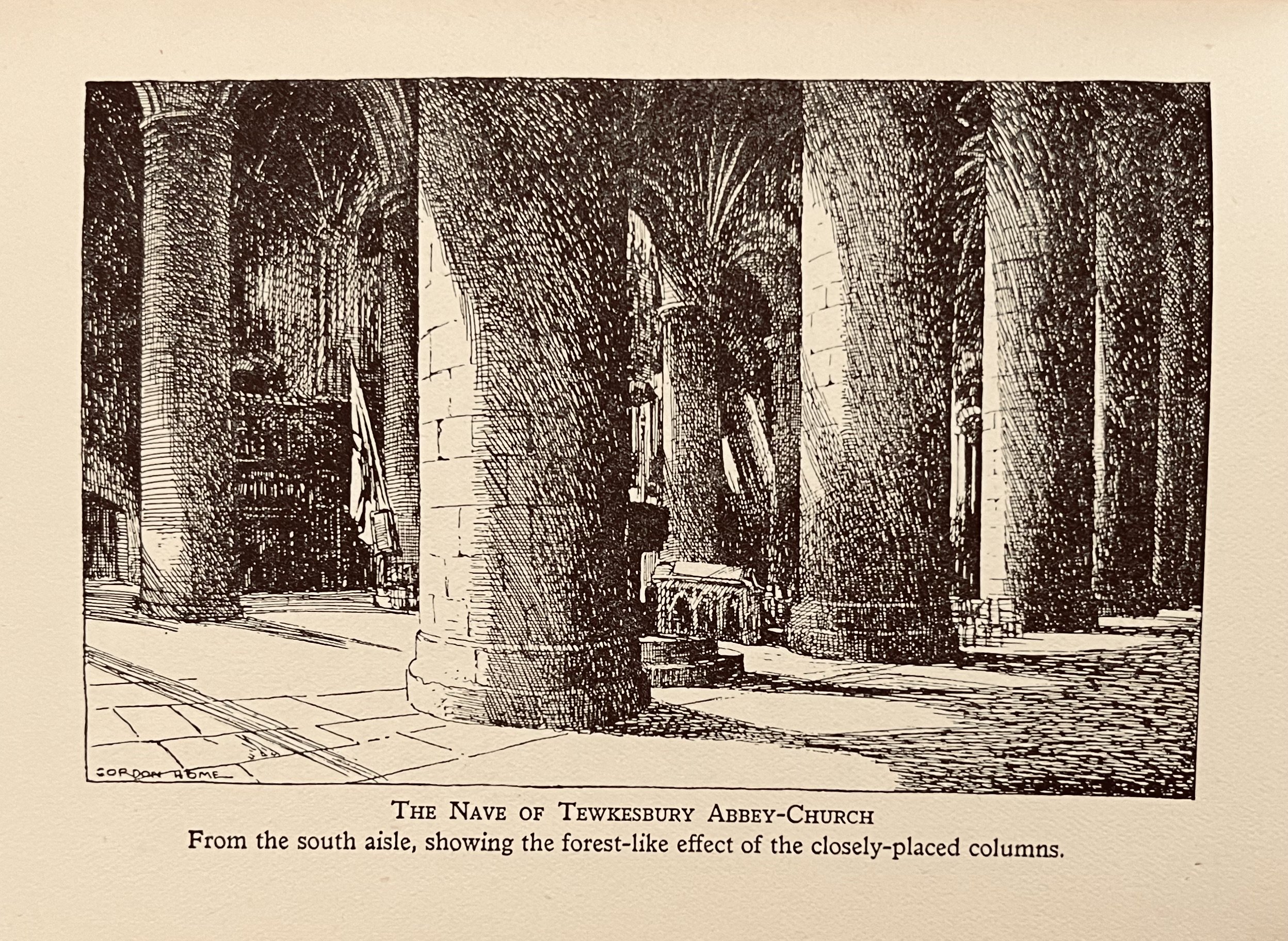
In regard to the illustrations, I have made a determined effort to avoid the stereotyped points of view, and to present some of the less familiar aspects of the structures.
Last autumn (1924) I visited the places concerned for the purposes of this book and took the photographs which appear in these pages - excluding three of interiors at Tewkesbury, which were taken by a friend a few years earlier and so full of the qualities for which I was in search that I welcomed the chance of including them.
The pictorial summary of English, Romanesque and Gothic architecture inside the front cover, and the series of effigies given on the back end-paper, are designed to be useful as reminders of the dates of the architectural periods and of armour and the costume of women in the Middle Ages.
Gordon Home
The Editor
MCMXXV
Note 1
A century on I vouchsafe that I live within the diocese of Tewkesbury Abbey, a place that I like to pop along to now and again, and I admit I’m quite proud that I can regard both the Abbey and also the Liverpool Anglican Cathedral as very welcome ports of call in calm and storm, wherein I find that peace whereas without, it seems at times that intenrationally everything is falling apart.
And then I check myself. Hang on. This is 1925. They are all just recovering from the Great War. I lean back against the back of the benchseat. Goodness me, within twenty years two born this year and in 1921 and 1923 will have gone.
I check myself again. The timeline of history shows me very clearly, that not a half century passes without war and suffering. I think I’ll keep my eye on Nature not human nature.
Note 2
This quotation refers to the First Anglo-Sikh War in 1846. The Battle of Sobraon, mentioned in the quote, was a key battle fought during this war between the British East India Company and the Sikh Empire. General Thackwell was a British commander who played a significant role in the battle, and his successful cavalry charge against entrenched Sikh positions is a well-documented event. KW
19 October 2025
All Rights Reserved
Liverpool and Gloucestershire
© 2025 Kenneth thomas Webb
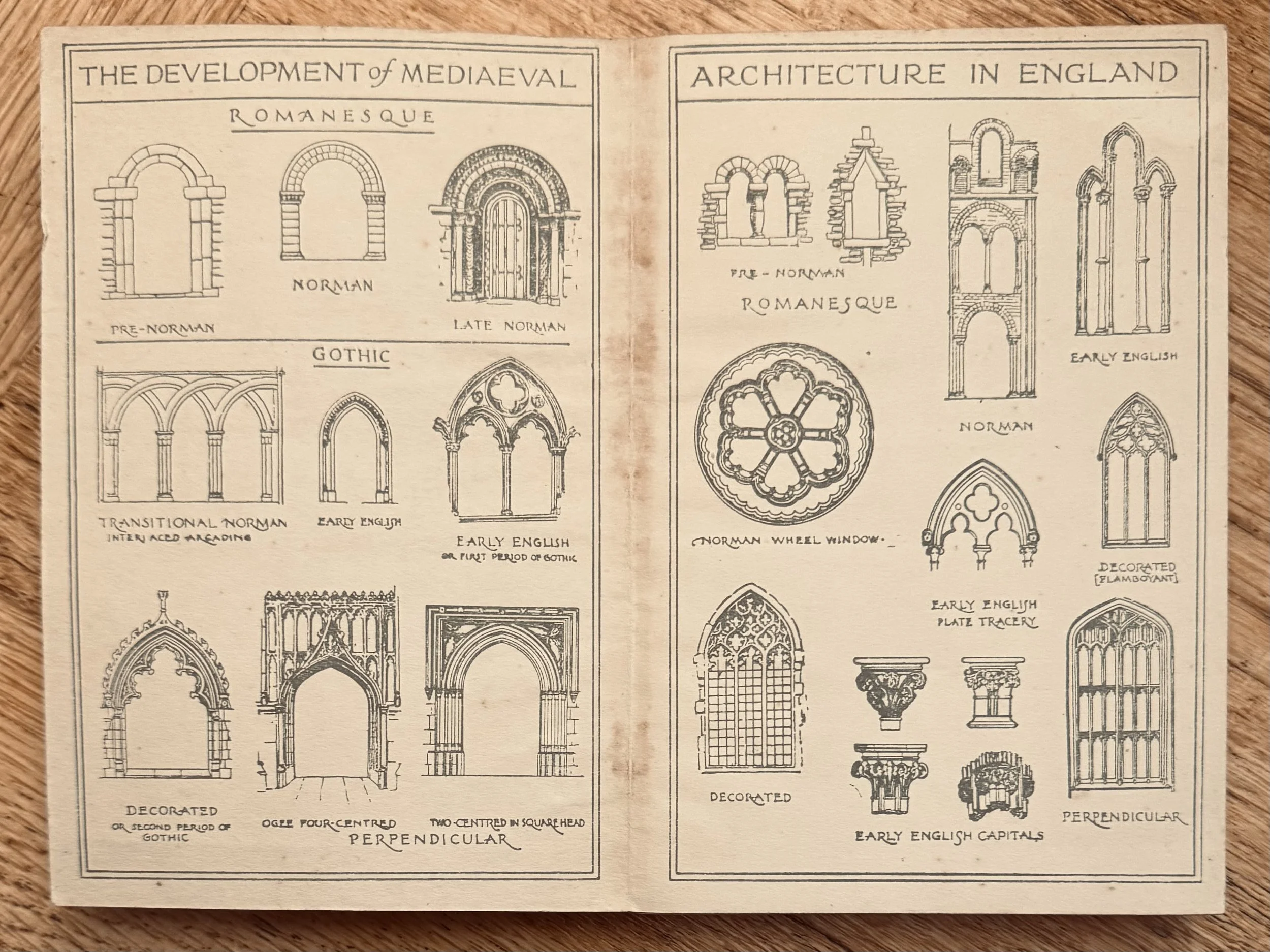
English, Romanesque and Gothic architecture
Gordon Home (1925)
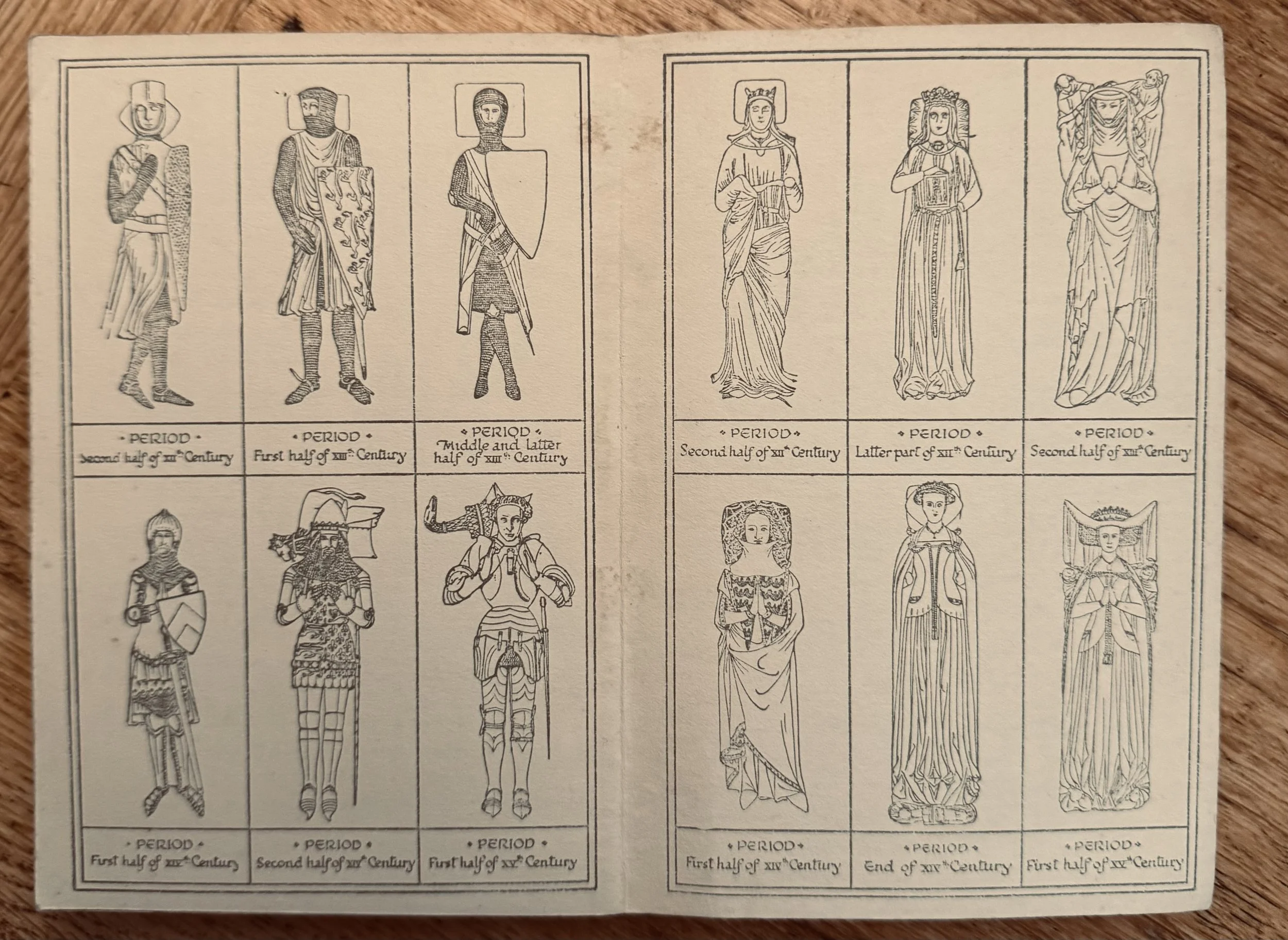
Architectural periods and of armour and the costume of women in the Middle Ages
Gordon Home (1925)
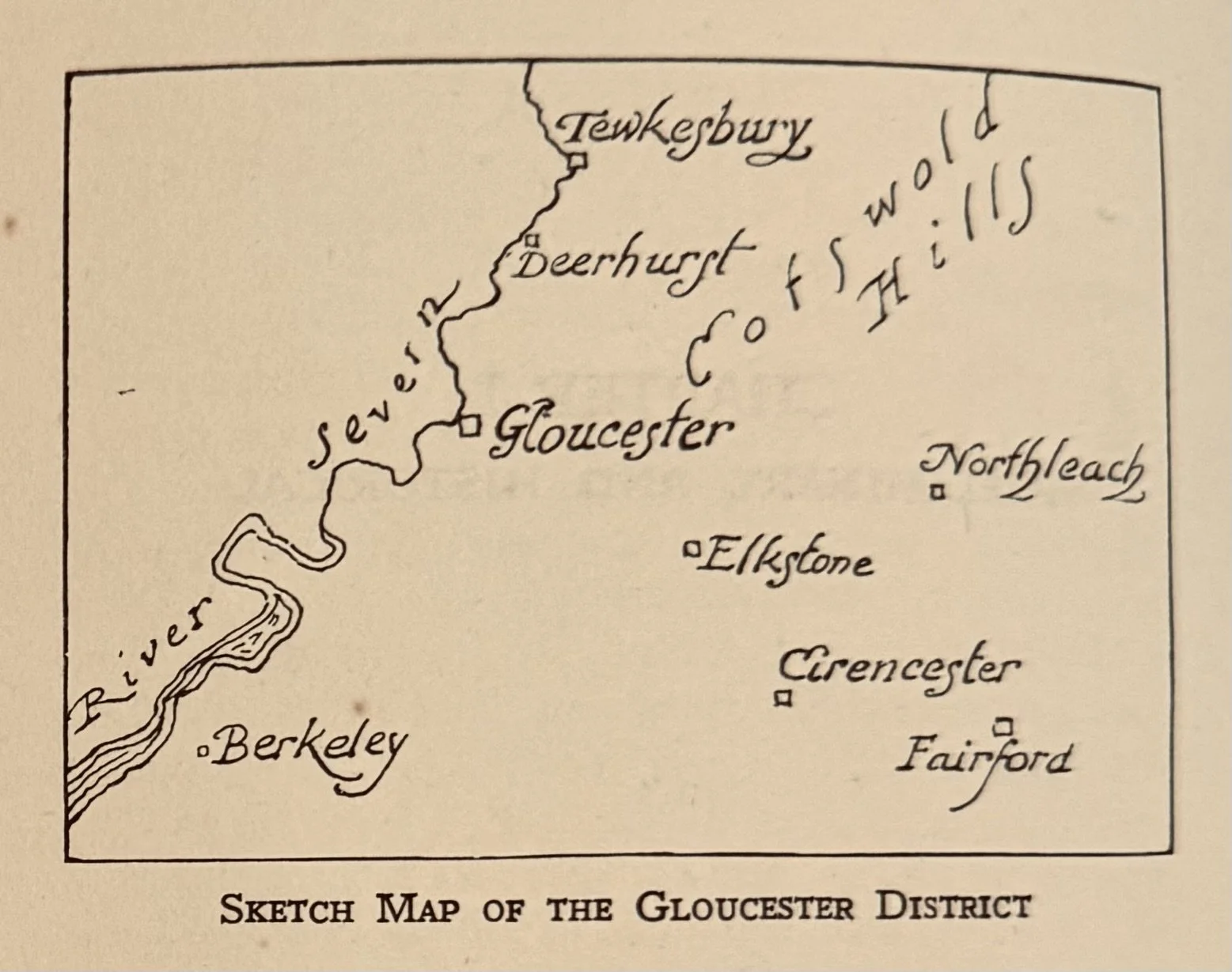
Published Sketch presumed to be by Gordon Home (1925) within the Booklet.