Gloucestershire ~ Tewkesbury Abbey 1471

Gloucestershire
Tewkesbury Abbey 1471
PRELUDE
In January 2023, in my local town in North Street Winchcombe in an Antiquarian Bookshop, I stumbled upon a delightful title published in MCMXXV (1925), Gloucester Tewkesbury & District in the Cathedrals, Abbeys & Famous Churches Series. The author, Edward Foord, reviews Gloucester Cathedral and Tewkesbury Abbey. Written 28 years before I was born, the style is exactly that by which I was taught to read and to write English. What a delight! A reminder, that I was once part of a world that has long since gone. Time never stands still.
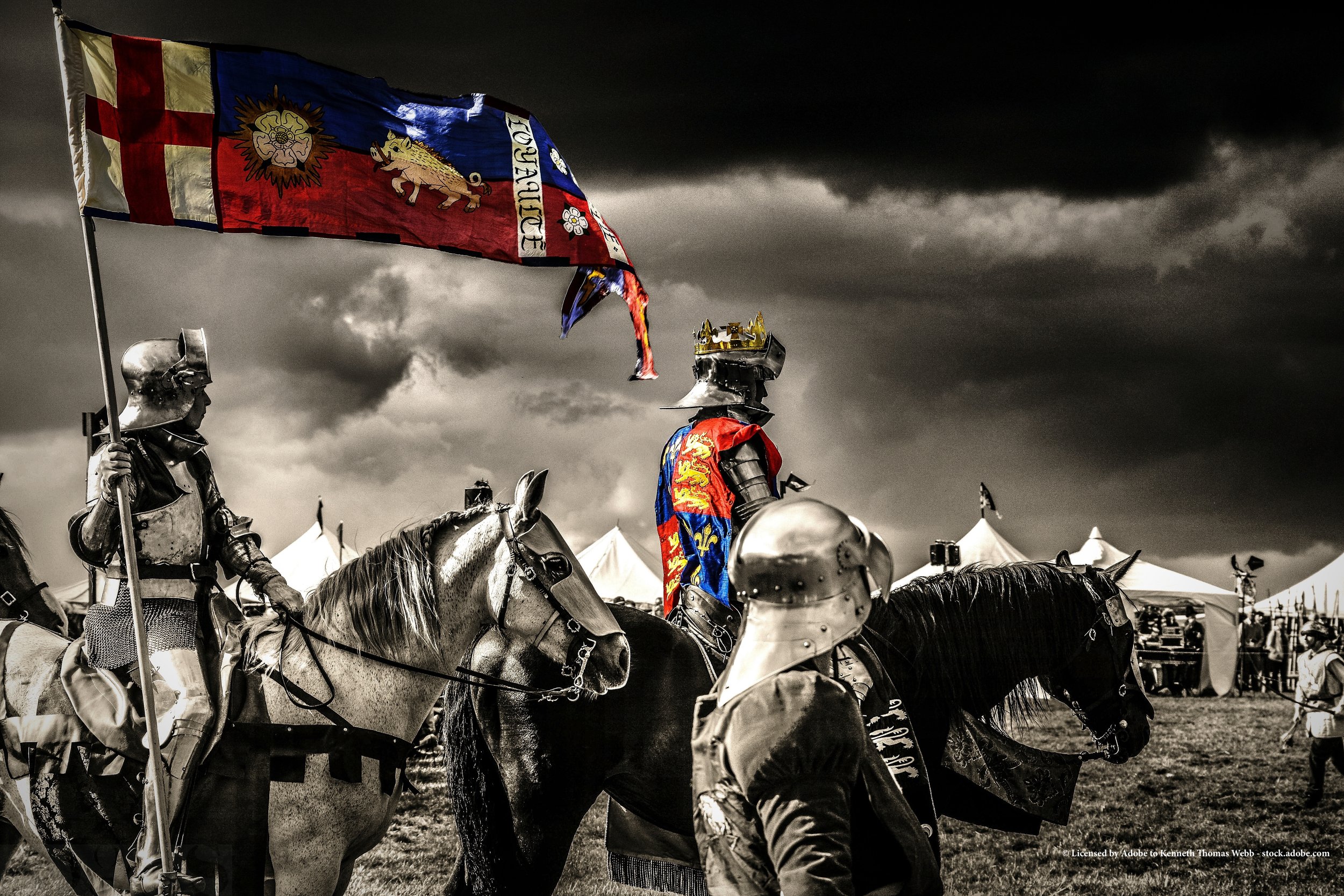
One part caught my eye regarding the 4th and 5th May 1471 in the Abbey immediately following the brutal Battle of Tewksbury about which I put into verse in late afternoon Sunday 2 October 2016.
Edward Foord’s final note, on page 104 before leaving the battle behind, caused me to re-examine the poem Tewkesbury Abbey. This in turn has led to detailed research on the Wars of the Roses. The poem needs amendment. For the moment, I quote Edward Foord:
“Beneath the pavement lie many victims of the Battle of Tewkesbury, and of the grim vengeance of the victorious king, and there, also, repose the mortal remains of two princes who fought on opposite sides on that fatal day: Edward (Lancastrian), Prince of Wales, slain on the field, and his cousin and enemy - perhaps his actual slayer - George, Duke of Clarence - foes and strangers in life united at last in death. In truth, there are many memories clustered beneath the solemn vaulting of Tewkesbury Abbey.”
The Poem
Tewkesbury Abbey ~ A Quiet Contemplation
Sunday,
A brisk Autumn afternoon,
The bustle of the high street,
The peace of the town…
Bustling yes,
Oppressive no.
A footprint of history,
The welcome palpable.
Small and quiet,
Increasingly attractive,
A town on two streets,
The desire to live here…
To walk these streets again.
Not from moorings of past days
But now, perhaps, in residence?
But where?
The Abbey grounds are silent
This brisk Autumn afternoon,
Except for birdsong,
Announcing shortly evensong.
Nature proclaiming
Humankind’s approach.
Walking the grounds,
The gardens, a delight
The borders, coast like
The great and high trees
Some still stand
On the day the town beheld
The horror of three pitched battles
Five centuries past
At Gupshill Manor
a stones-throw...
Two ancient houses
White and Red,
Two Roses in contention
York and Lancaster.
Two families,
Each contend the English Crown
Blood to meadow did deliver.
Each believe they do God's will
Each insist they have God's ear!
Hapless souls,
Wounded
seeking sanctuary,
For a moment relief
Relief I sense
Within these hallowed precincts,
The king
Victorious
Granted sanctuary
Executed others
But then reneged his treaty
Just two days after
his service of thanksgiving
for this bloody Victory.
Bloody Meadow reached out
across three adjacent meadows,
seeping into this ancient Abbey
congealing these ancient stones,
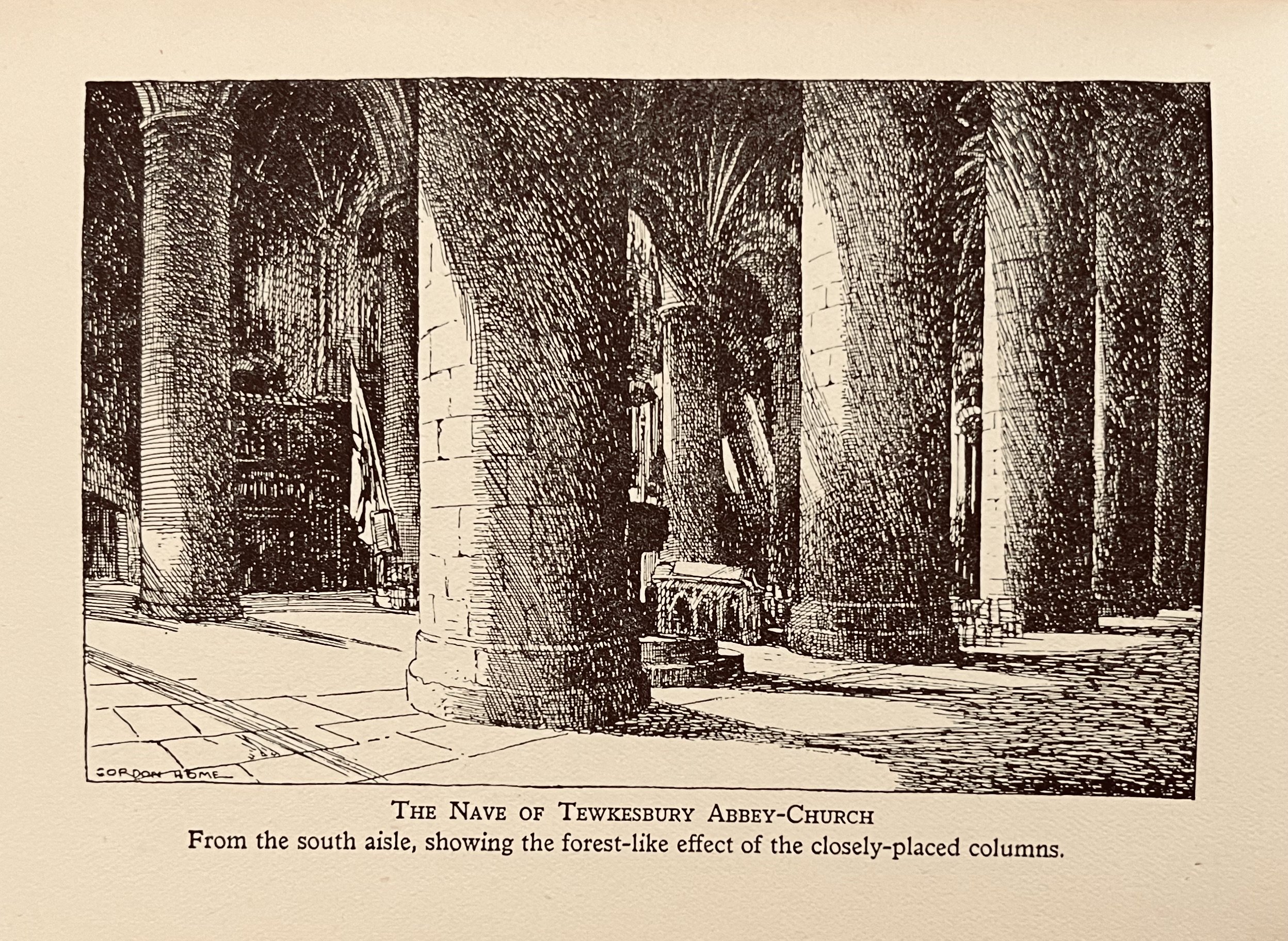
these very pillars,
This Nave
and even around and on
the great High Altar
... the bloody precincts of its cloisters...
An act so barbarous,
The Abbey deconsecrated!
Townspeople shocked beyond comprehension…
The House of Bishops moved swiftly
Reconsecrated before that infamous year
stepped from reality onto the
parchment of history.
Now, at peace within her diocese
How good to walk the Abbey Precincts
and give thanks in Evensong
to One Who stands some where
Yes, somewhere and, moreover,
outside time.
It is thus my way
To consider afresh Edward Foord
He, I sense, deserves the final word:
Beneath this pavement lie many victims
of the Battle of Tewkesbury,
and of the grim vengeance of the victorious king,
and there, also, repose the mortal remains of two princes
who fought on opposite sides on that fatal day:
Edward (Lancastrian), Prince of Wales, slain on the field,
and George, Duke of Clarence his cousin and enemy
perhaps his actual slayer
foes and strangers in life
united at last in death.
In truth,
there are many memories
clustered beneath the solemn vaulting
of
Tewkesbury Abbey
There are, indeed, Sir!
My thanks to you
For so perfectly providing
The ending.
This draws the line.
Peace is restored.
All is well in the Nave.
All rest.
There is Peace Now,
And with the morning
Comes Light.
Finis
12 July 2025
All Rights Reserved
LIVERPOOL
© 2025 Kenneth Thomas Webb
Author Note
Written 2 October 2016
Revised 23 July 2022
Re-edited 11 July 2025
Images by KTW
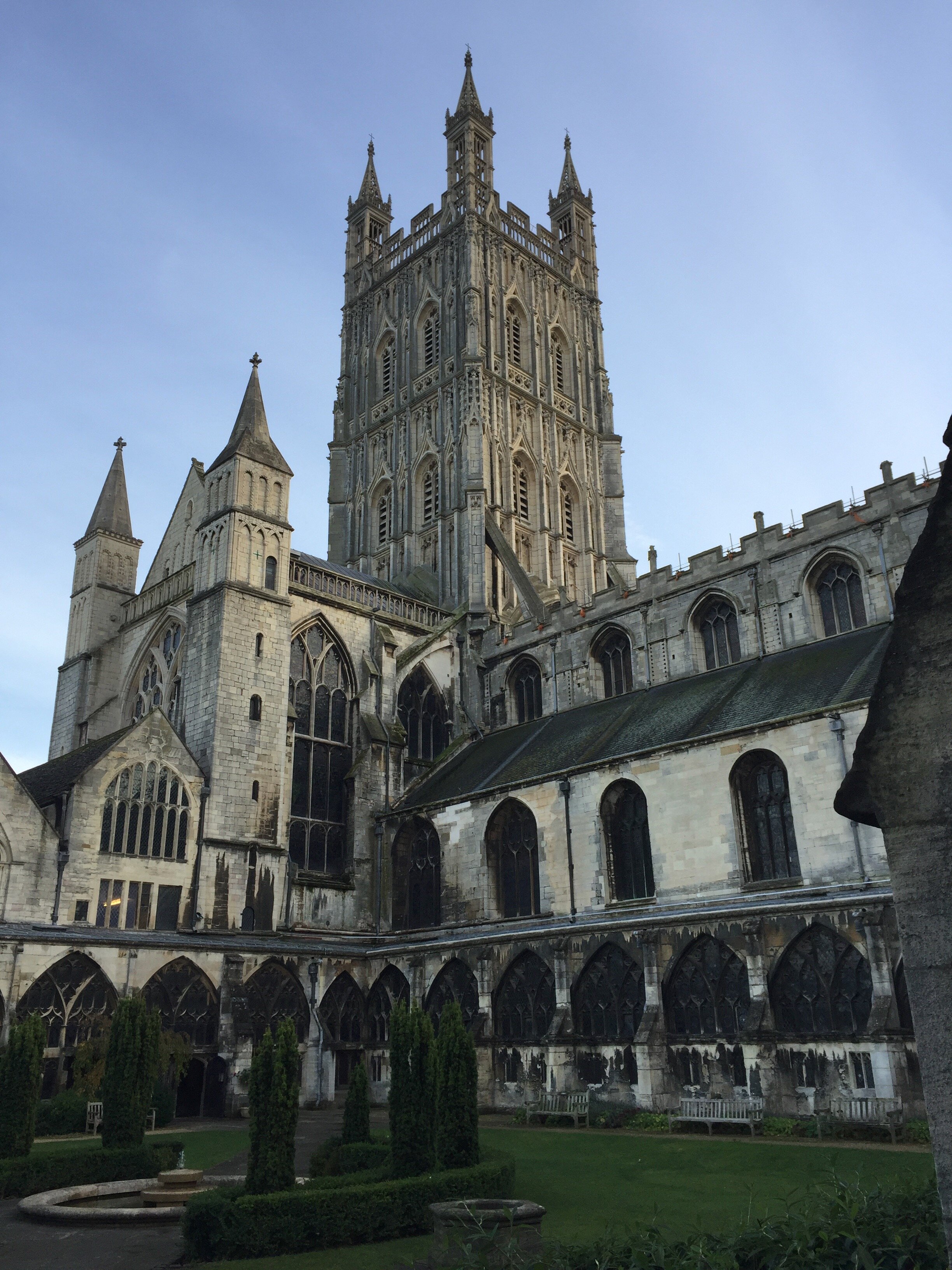
1 Tewkesbury Abbey before Choral Evensong in the Twilight 6.31 pm Sunday, 20 November 2016
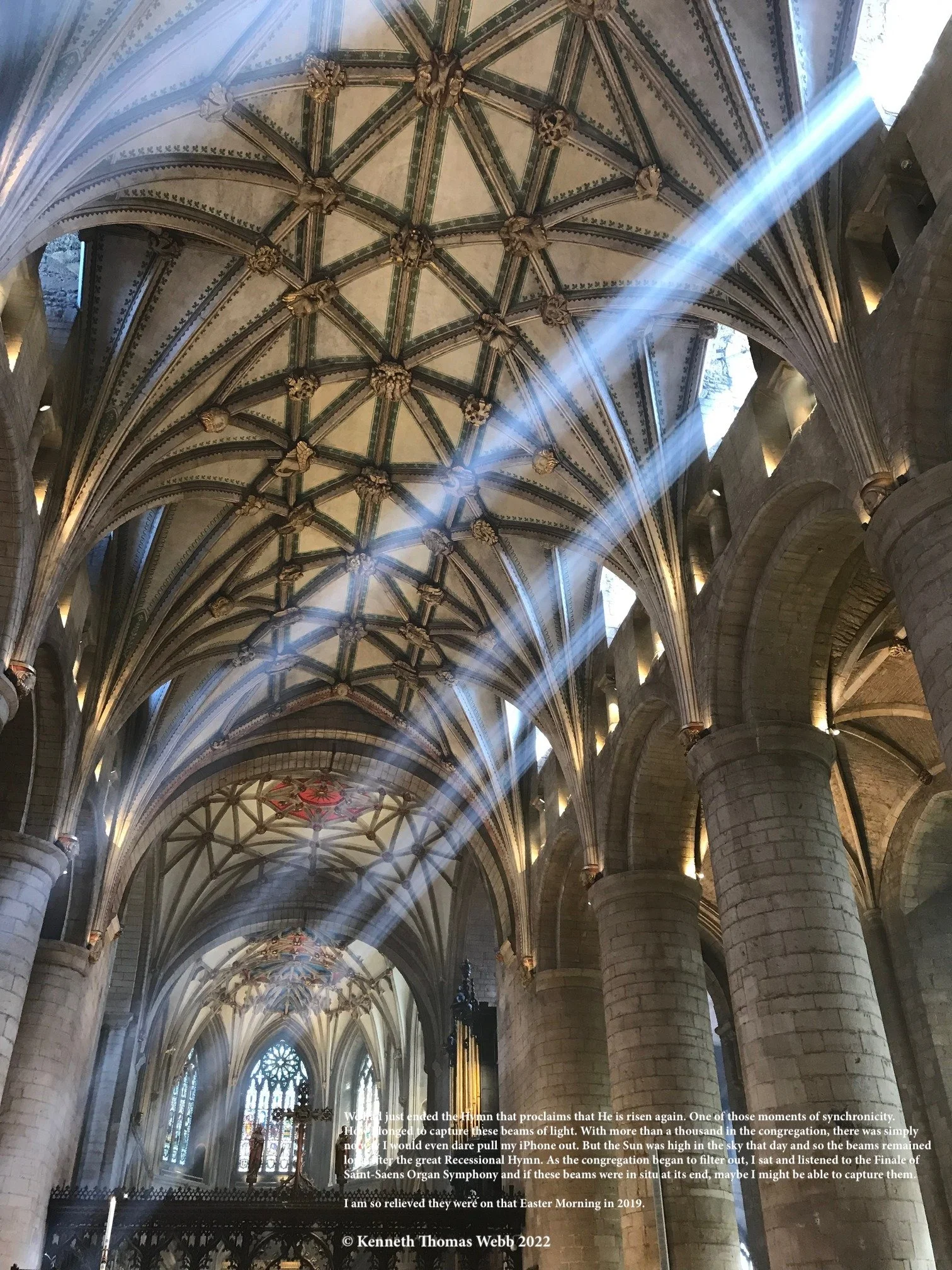
2 Tewkesbury Abbey after the end of the Easter Sunday Morning Service and Eucharist 12.30 pm Sunday, 21 April 2019
Saint Saens Solo Organ Arrangement of the Finale by Jonathan Scott
Saint Saens Symphony Finale ~ Auckland New Zealand Symphony Orchestra
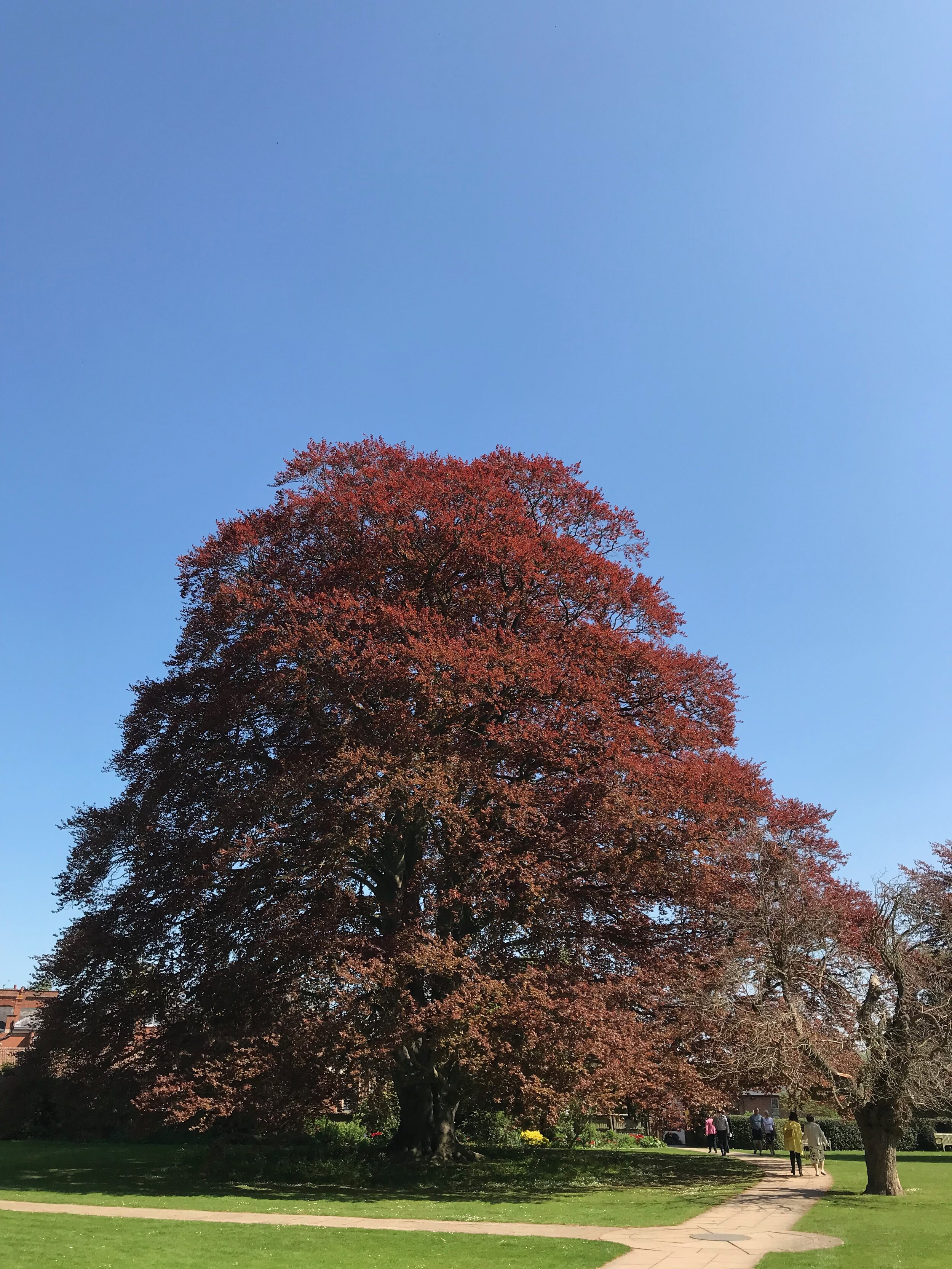
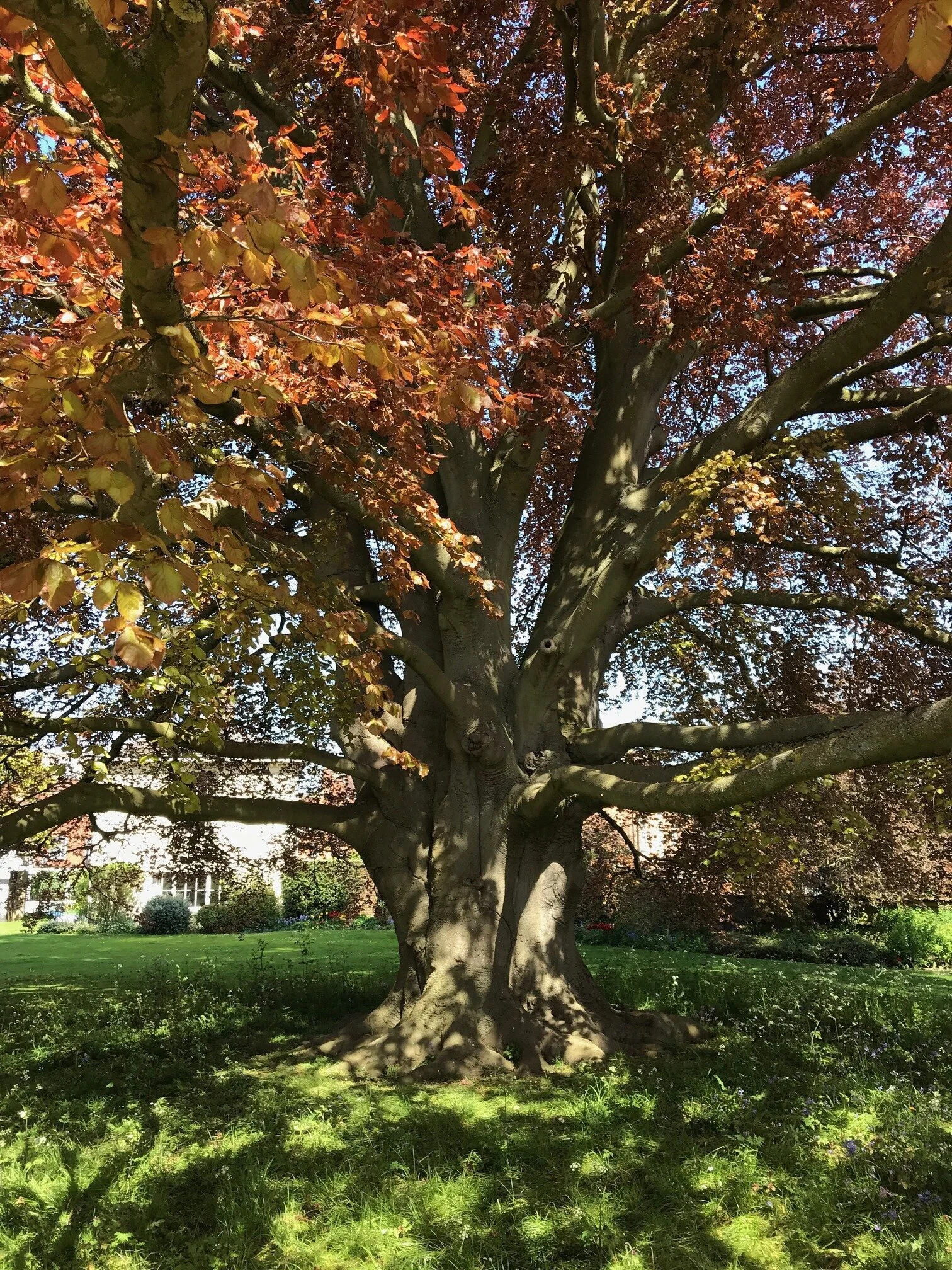
Copper Beech planted in 1588 in the year of the Spanish Armada and its defeat by Queen Elizabeth I
This Copper Beech, in the grounds of Tewkesbury Abbey is 432 years old (as of 2020), being planted in 1588, the year Queen Elizabeth I withstood Spain and whose Navy under the command of Sir Francis Drake defeated the Spanish Armada. In 1940, the Copper Beech was already a mighty 352 years of age and little different from what it is 79 years on when Hitler was very much intent on invasion.
Tewkesbury Abbey is, an infrequent place of worship, I live within its Diocese. Infrequent, because I am outside the box and do not like falling into the pattern of attendance that all too quickly moves from faith to religiosity.
There is a light and countenance about it that is almost surreal;
a place of praise, a place of deep and quiet and private contemplation,
a place where, unlike our Cathedral, we can look from the furthest point in the Nave to the High Altar with a complete and unimpeded view.
Each to their own, but for me certainly, the high point of any service is when the Reverend Canon or Reverend Bishop declares the blessing from the High Altar.
Nevertheless, I have a very liberal Twenty-First Century approach
and it is within that perspective that I view all Scripture
which, as one can imagine, means I’m often ‘out-of-step’ or ‘outside-the-box’.
One has only to visit A Thousand Dimensions, or read From Death and Back to Life ~ A Quantum Leap, to see that the old and new do juxtapose and align if we have an open mind to permit such alignment.
Ken Webb is a writer and proofreader. His website, kennwebb.com, showcases his work as a writer, blogger and podcaster, resting on his successive careers as a police officer, progressing to a junior lawyer in succession and trusts as a Fellow of the Institute of Legal Executives, a retired officer with the Royal Air Force Volunteer Reserve, and latterly, for three years, the owner and editor of two lifestyle magazines in Liverpool.
He also just handed over a successful two year chairmanship in Gloucestershire with Cheltenham Regency Probus.
Pandemic aside, he spends his time equally between his city, Liverpool, and the county of his birth, Gloucestershire.
In this fast-paced present age, proof-reading is essential. And this skill also occasionally leads to copy-editing writers’ manuscripts for submission to publishers and also student and post graduate dissertations.