U A : The Economy is Crumbling: 68% of Russians Suddenly Want the War to Stop
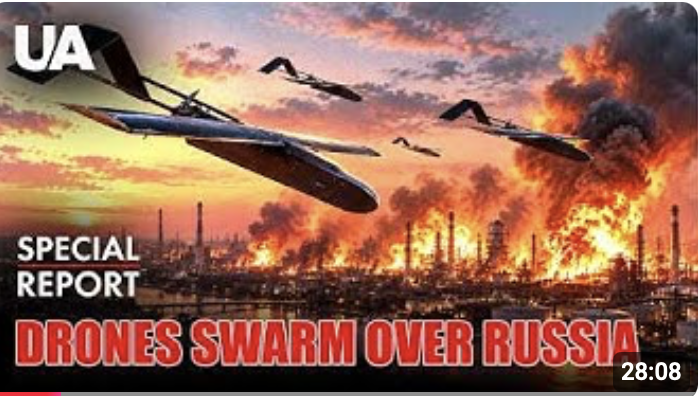
HERE IS THE LINK: 🔗 HERE

The War in Ukraine - Ukraine Dispatches
UAT English
Long Range Sanctions
The Economy is Crumbling: 68% of Russians Suddenly Want the War to Stop
UAT ENGLISH*3.9 K VIEWS*
1 HOUR AGO SUNDAY 4 OCTOBER 2026

VIDEO OVERVIEW
This video report, titled "Long-Range Sanctions," explores how Ukrainian long-range drone strikes are impacting the Russian economy and public sentiment regarding the ongoing war.
Main Points:
Economic Impact: Ukrainian drones are targeting critical infrastructure, including oil refineries, fuel depots, and logistics hubs like Wildberries and Ozon (0:45, 17:50). This has led to severe fuel shortages across Russia, resulting in massive queues at gas stations and supply chain disruptions (5:30, 8:03).
Banking Sector Strain: The destruction of major logistics hubs has triggered a chain reaction, pushing companies toward bankruptcy and creating a liquidity crisis for major Russian banks like Spar and VTB (18:36).
Shifting Public Opinion: The report highlights a significant shift in Russian society. According to polling data, 68% of Russians now support an immediate end to the war (22:14, 22:33). The illusion of a "special military operation" happening far away has been shattered as citizens increasingly experience the consequences of strikes firsthand (2:40, 4:40).
Strategic Goal: The report posits that by destroying these economic and military targets, Ukraine aims to drain the Kremlin's war chest and force a path toward peace (1:36, 27:30).
The Special Report Conclusion
The UA Special Report argues that long-range strikes have become the most effective form of sanctions, causing internal pressure that is increasingly difficult for the Russian authorities to ignore (27:14).
HERE IS THE LINK: 🔗 here
UA FREEDOM IS FUNDED IN WHOLE OR IN PART BY THE UKRAINIAN GOVERNMENT.
As at 19:074 October 2026 there are 470 likes three, 989 views
VIDEO DESCRIPTION
Ukrainian drones are striking deeper than ever and the war that Russians once watched only on TV is now shattering their everyday lives. Oil refineries, fuel depots, ports, and major logistics hubs like Wildberries and Ozone are going up in flames. Gas station queues, severe fuel shortages, and lost export. Revenues are mounting unbearable pressure on the Russian economy.
Special Report, “Long-Range Sanctions, the UA Team breaks down how strikes deep inside the Russian rear are draining the Kremlin‘s resources, threatening the banking sector, and why an increasing number of Russians are demanding an end to hostilities.
Can this chain reaction force Putin toward peace?
Watch how Ukraine is targeting the aggressor‘s key vulnerabilities and reshaping the wall.
Be sure to subscribe to UAT English!
Website: HTTPS:>> UAT. UA/EN/
750,000 subscribers
TRANSCRIPT
UA Special Report
Sunday 4 October 2026
Part I
They supported the war on television. Then suddenly they saw it out their own windows. Most Russians now want an immediate end to the so-called special military operation. That’s what the polling shows and so do thousands of videos on social media.
Unnamed Young Russian member of the public:
“This is a nightmare. When is this hellish war finally going to end? It’s a total nightmare. Something‘s burning over there. It’s absolutely horrifying.”
UA Presenter Max Lavov: (UA PRESENTER) :
Ukrainian drones are destroying the fineries, logistics hubs, export terminals. And with that, they’re stripping Russia of the money it spends on the war and stripping Russians of the illusion of peace time life.
A young Russian lady speaking from her home:
It’s only getting worse. The drones come and go as they please every single day.
UA PRESENTER:
How are Ukrainian drones forcing Russia to end the war?
Why will strikes on Wildberries and Ozone bowl over Russian banks, VTB and SPAR, the ones financing Russia’s military plants?
And why is hitting refineries and ports setting off a chain reaction that’s already bringing down whole sectors of the Russian economy one after another?
Watch in this, our Special Report ~ LONG RANGE SANCTIONS
How are Ukrainians stripping Putin of the resources for war and forcing Russians toward peace?
In July 2026, Ukraine’s first strikes on Wildberries logistics hubs. The sound of explosions, huge clouds of smoke terrified Russians.
Frightened young man:
It’s blew up. My God, it blew up. My legs are shaking. There it goes. What the hell!! I don’t want any of this!!!
The young man is in sheer fear as he watches the drone strikes.
Before they only saw the war on television. For four years, Putin‘s propaganda told them that far away in Ukraine, there was a so-called special military operation. Putin said the country needed some action. Without it, he said, things get dull. Stagnation.
For a long time, the propaganda convinced Russians the so-called special military operation had nothing to do with them, that they’d go on living ordinary lives. A great many believed it, even when large explosions went off outside their windows and shook their buildings, people still struggled to grasp that it was real.
Elderly gentleman in street:
We thought the war had started!
A lady in a car park:
Terrifying. Just terrifying. Honestly, it’s as if there’s a war.
AS IF THERE’S A WAR
But the words AS IF no longer apply here. This is war. And it has reached every Russian. Every resident of the aggressor state has felt it. The war Putin started in Ukraine has come home to Russia.
A young lady in sunglasses sheltering in her car:
The drones were buzzing overhead.
They kept shooting them down right above our house.
Flashes everywhere.
Houses burning over there.
Today was insanely scary.
here were endless flashes from the drones outside my window.
Just tell me, how much longer is this going to go on?
Why is it always ordinary people who suffer?
Young woman in a darkened room speaking to her laptop:
The war has wrecked ordinary life for the overwhelming majority of Russians.
The illusion of peace has given way to fear for their own lives.
Huge numbers of people have already watched Russian air defences shoot down drones directly over their heads.
The fridge just flies open.
Just so you understand how strong the blast wave is, the fridge in our apartment, open.
We don’t have a shelter, only the bathroom.
Previous young lady:
Every new day, it gets worse.
The drones come and go as they please.
You can’t get to work, get back home,
or walk with your kids to …
Ukrainian drones strike refineries, logistics hubs and export terminals in Russia almost daily. Russian electronic warfare systems try to knock them out of course, often redirecting them straight into residential high-rises.
(An intercepted drone veers off course, colliding with an rooftop apartment in high-rise and detonating inside).
>> Tens of thousands of Russians in every corner of the country have seen with their own eyes what war is. Explosions, the sound of air defences working, sirens, wailing, and most residents of the aggressor estate have felt the consequences of Ukrainian strikes firsthand. Refineries and oil depots are burning. Russia is in a fuel crisis. Enormous lines at gas stations across the entire country, even in regions far from the front.
>> And all of this is happening in TUMIN. And this is supposed to be the oil and gas capital. This is beyond insane. Even in Moscow, there are shortages. And this is where the authorities truck in gas from other regions, trying to keep up the appearance that everything‘s fine in the capital.
>> An enormous number of cars. I’m sick to death of you people in your gas. There’s nothing. Only a few stations even working.
>> More and more often, the lines stretch for miles.
>> it starts right here.
>> and off it goes.
>> three lanes of it. This is unbelievable. And the line reaches back here, too. Here’s where it ends.
>> when do we get up there? Never. People stand in them sometimes for hours and sometimes from morning till late at night.
>> It’s 11:30. And this whole thing is the line for gas. I can’t even tell you where the station is because it’s a good couple of miles.
>> At the station since seven in the morning,
>> basically about 12 hours at the gas station now.
In the City of Sochi. Nerves stretch to the breaking point. Shouting matches. One more word and I’ll wreck your car!
>> What exactly are you telling us? I told you they’ll be here any minute and they’ll deal with you.
Fights that even women are getting into.
UA PRESENTER:
Russia is sliding back into the 90s with their gangsterism and score settling by force and firearms. Here’s one Z volunteer under the alias Alex Rodriguez writing:
“that he pulled up to a gas station with a Kalashnikov. I got out the jerry can and started filling it with my back to the gas station attendants. They muttered and grumbled something behind me, saying, “Jerry aren’t allowed.“
But there was no conviction in it and they didn’t come close. I filled the can in silence and drove off with the sad, unpleasant thought that the 90s are coming back.
Whoever has the gun is the one who’s right.”
UA PRESENTER:
And at one gas station, a woman was spotted with a handgun, using it to make sure nobody cut the line.
The gas crisis is pushing Russia toward chaos because whoever doesn’t fill up in time gets nothing. By the end of the summer, only one in five Russian gas stations had any gas. The rest had none. Zeros on the displays everywhere. The gas ran out. And nobody knows when there will be more. Zeros here, too.
>> Unbelievable. Absolutely unbelievable.
Very long lines. And most of the time, the station has no gas. People just stand and wait for the tanker truck to show up.
>> How can this happen in an oil superpower? Russians have started turning that question over in lines that long. There’s time to think.
>> You’re standing there and of course you’re cursing, stressing, getting angry, and it hits you that the special military operation is right here, right next to us. And now it touched every last one of us.
>> The war is the reason for this whole fuel collapse. An obvious conclusion. And one [that] Russians are voicing more and more often.
UA PRESENTER What do you think is behind this crisis? A question to a driver sitting in a queue.
>> What do you mean ‘what’?
>> The war.
>> What else? Before that, everything was fine. That’s all there is to it. I think there’s only one reason. It’s not going to get any better from here.
A different man in a different car:
>> And then people draw one more conclusion just as obvious.
The war has to end!
Lady attendant at gas station:
>> It’ll get worse. People will just wear out. And at some point, the whole thing snaps. Everyone’s on edge. Everyone’s angry. All of this has to stop. The sooner the better. This whole war, nothing good comes of it. And what now? Gas quality is going to get worse. We’ll start repairing our cars. And what’s the point?
Who wins from this? Only the oligarchs.
So why do we need it?
People need to use their heads and everything will be fine.
And the ones who don’t use their heads, that’s how you end up here.
UA PRESENTER: Ukraine is hitting Russian refineries, oil storage facilities, and seaborn export terminals ever harder. The number of strikes this year has risen more than tenfold compared to last year. August 2026 set a record with Ukrainian drones hitting 12 major oil refineries.
As a result, as of the start of this autumn (fall), Ukraine has knocked out more than 40% of all Russian refining capacity and oil terminals are ablaze across Russia, which means less and less storage.
Ports are burning, which means those barrels are harder and harder to sell abroad.
Refining it, storing it, exporting it in full. None of that works anymore.
And Russia has started to drown in its own oil. There’s nowhere to put it and the Kremlin is left with only one option. Cut production. And for the country’s budget, that is a catastrophe.
A gentleman speaking from his home online:
And what it comes down to is that Russian oil companies are forced to shut down entire fields to decommission wells. Not just some for them, but decommission them. And wells like that will never produce oil again.
Restarting one later or drilling another well next to it is commercially completely unviable.
And because of Ukrainian strikes, Russia will see declines not only in exports and refining, but in the volume of oil it produces and that will have very long lasting consequences.
Revenue from Russia’s oil industry are already falling fast.
In August, for example, they were 22% lower than the same period last year. And the situation will only get worse. Because as long as the war goes on, strikes on Russian refineries will continue.
Part II
Here’s what the Commander of Ukraine’s unmanned systems forces, Robert BRAVDI, call-sign MAGYAR, has to say…
All of these facilities are sources of funding for the war. Putin has natural resources, minerals and by exporting them, he earns hard currency. And that’s what finances the war. Every source of the war is a legitimate military target and must be destroyed immediately to bleed the war’s funding system dry.
For a long time, Putin didn’t even mention in his public remarks that oil refineries were burning across the country. He acted as if nothing of consequence was happening. But the problem grew so widespread that even a dictator this detached from reality can no longer ignore it. And so Putin came out with the statement.
He did not expect Ukraine to strike Russian refineries. Why have we ended up in this situation? ‘Because we proceeded on the assumption that these are purely civilian facilities. That they cannot be the targets of any attacks whatsoever, even in an armed conflict.’
“Because we proceeded on the assumption that these are purely civilian facilities. That they cannot be the targets of any attacks whatsoever, even in an armed conflict.”
The cynicism of those words is staggering!
Russia destroyed Ukrainian refineries with missile strikes in the very first years of the war. Since 2022, Russia has been hitting warehouses full of food and medicine and densely populated residential districts in Ukraine. And Putin still says Ukraine’s defence forces are playing unfairly by attacking Russian refineries, plants that supply the Russian army and underwrite Russia’s military budget.
Part III
UA Presenter:
For military analysts and historians, Putin‘s lied about not expecting this.
Recall Hitler. He also didn’t expect his enemies to bomb German cities.
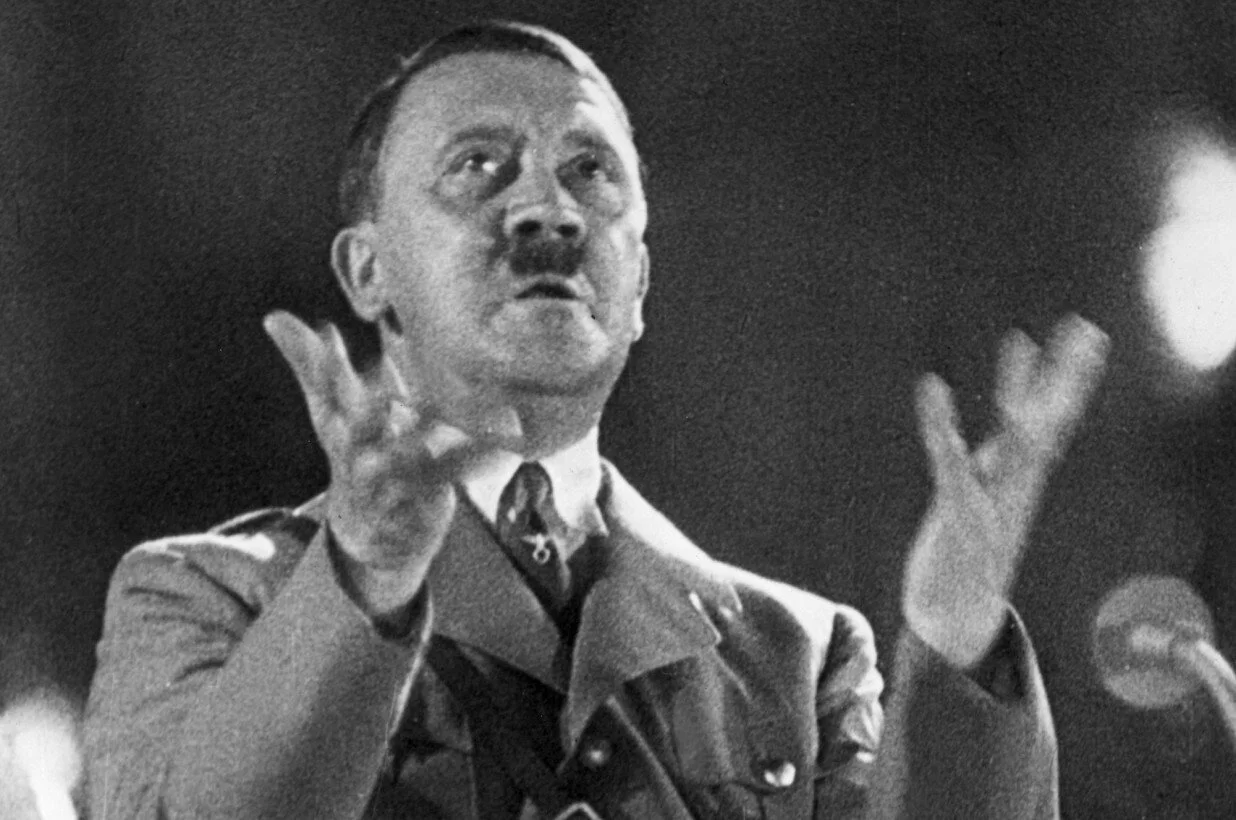
By Courtesy of the Imperial War Museum Archive of which KTW is a fully paid up member.
Here’s what British Air Marshal Arthur Harris had to say on the subject:
The Nazis entered this war under the rather childish delusion that they were going to bomb everyone else and nobody was going to bomb them. At Rotterdam, London, Warsaw, and half 100 other places, they put their rather naive theory into operation.
They sewed the wind and now they are going to reap the whirlwind.
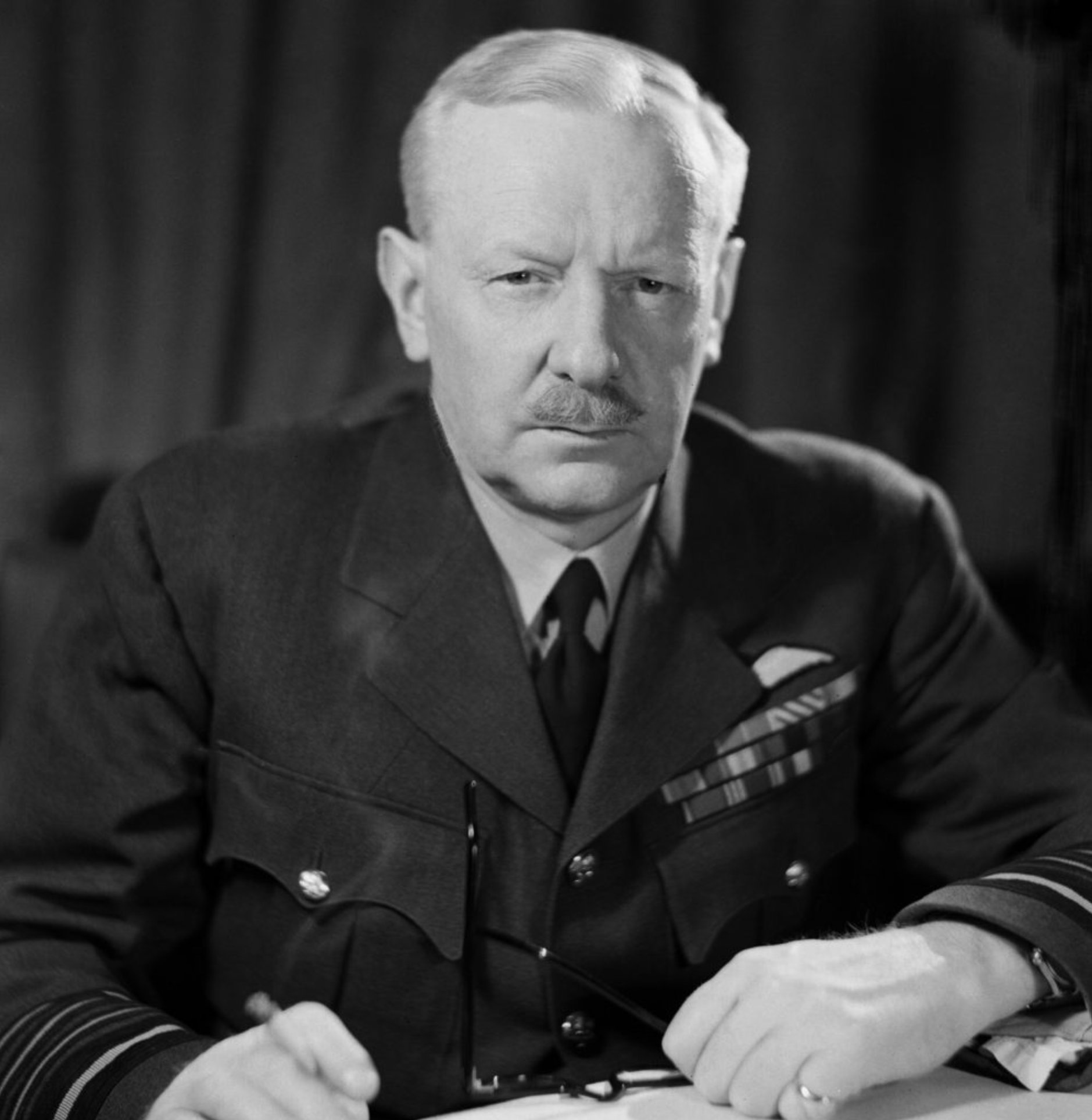
Air Chief Marshal Sir Arthur Harris Air Officer Commanding-in-Chief Royal Air Force Bomber Command 22 Feb 1942- 22 September 1945. Photograph from my personal archive (taken from the autobiography) KTW Flight Lieutenant RAF VR Rtd 1974-1991
German cities burned and so did the oil plants of Hitler’s Germany and Russia’s refineries are now burning. Russia too is reaping the whirlwind.
Part IV
Since 2022, Russia has been destroying Ukraine’s grain infrastructure, its Silos and ports.
Now Ukraine is striking Russia’s grain terminals in turn.
Novorossiysk has taken the worst of it. Here are local residents speaking with some bitter irony.
Russian Person A:
The consequences of the special military operation. Fire. The whole city’s in smoke. The stench is brutal. Grain terminals hit and burning. Everything’s burning.
Russian Person B:
Every last one wrecked. What a stench.
Russian Person C:
Novorossiysk is the main seaport for Russia’s agricultural sector. 80% of all its grain exports used to pass through it. After the Ukrainian strikes, that capacity has shrunk drastically. Now, Russia cannot sell its grain abroad in full, which means it is losing hundreds of millions of dollars. The losses in hard currency earnings for agriculture are staggering. What this leads to is dozens, maybe hundreds of bankruptcies among companies that borrowed against grain exports. And now the exports aren’t there. Farmers, small operations, and large ones alike are on the verge of ruin. Nobody has any use for their grain now.
Russian Person D:
The port of Novorossiysk, the port of Azov, both closed.
There’s no demand for grain.
Warehouses, Silos, all of it overflowing.
Not a soul needs this stuff.
Russian Person E:
Nobody wants it, not even the traders. Exporters have stopped taking deliveries altogether. Grain prices inside Russia have collapsed by nearly 40% on average, which means farmers spent the whole year working at a loss. Every farmer out in this field lost a whole lot of money this year. If you look at the numbers from the last two or three years, you will understand just how deep a hole we’re in. A significant share of the harvest will simply rot in storage. Russian farmers are braced for collapse. They are bankrupt in all name. They won’t be able to repay their loans, and they won’t have the money to put a crop in the ground. That will devastate next year’s harvest.
UA Presenter:
But none of this crisis for Russia’s agricultural sector had to happen.
Back in early August, Ukraine proposed to the Kremlin a mutual halt to strikes on seaports, specifically that Russia stop hitting Одеса (Odesa) and Чорноморськ, (Chornamorsk) and in return, Ukraine’s forces would hold off on striking Novorossiysk’s grain infrastructure, but Putin refused.
Ukraine also proposed a full mutual moratorium on deep strikes, so both countries would stop attacking each other’s energy and civilian infrastructure in the rear.
The Kremlin dictator rejected that, too. His reasoning was shocking in its cynicism.
President Putin:
[more usually referred to now by his own Russian People as ‘the bunker-dweller’ KW]
“Our strikes on Ukrainian territory are far more powerful, far more painful, and let’s be blunt, far more destructive.”
Part V
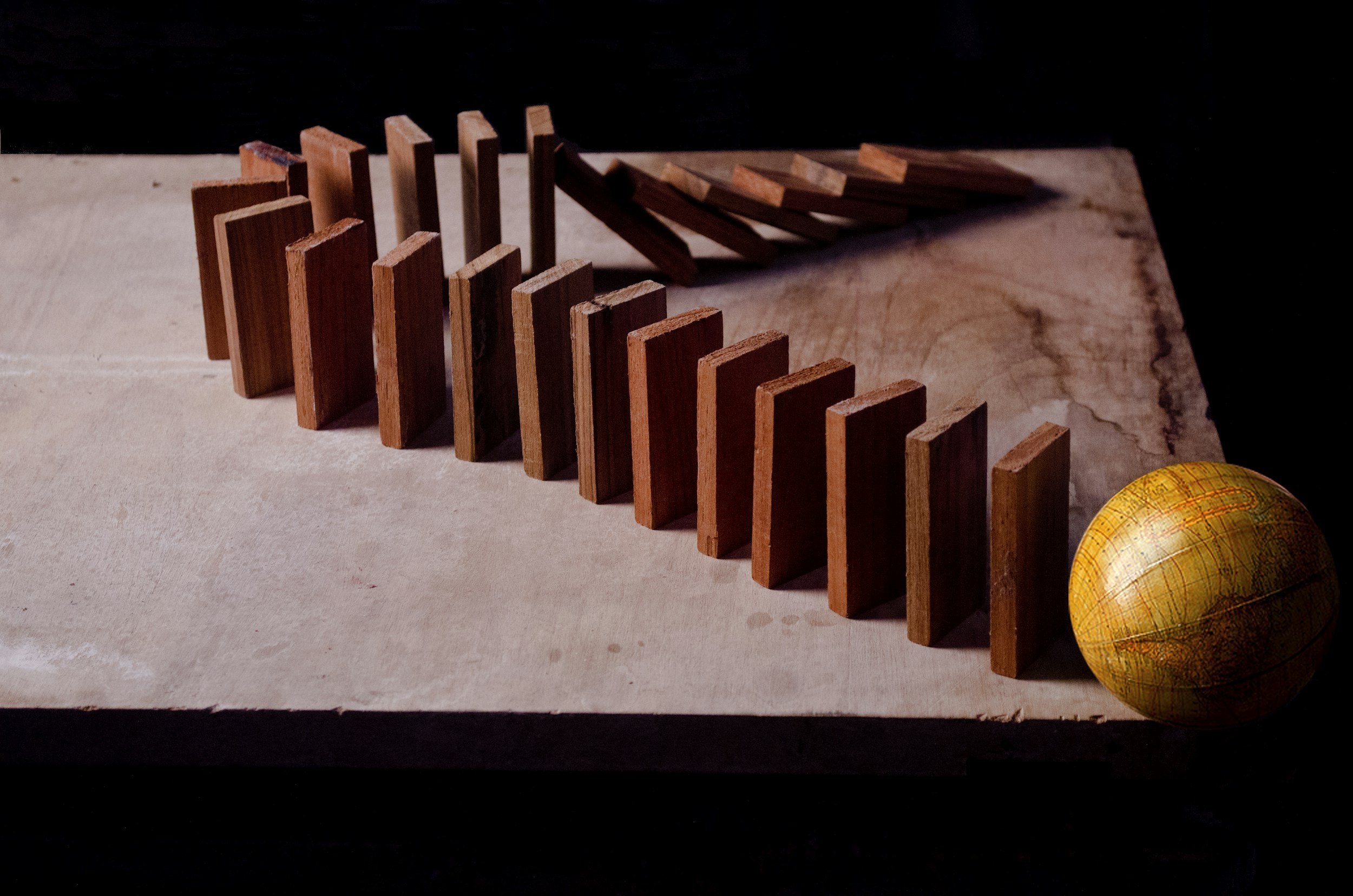
The Domino Effect that Sets Off the Unstoppable Chain Reaction
And Russia kept right on delivering those strikes, mostly against warehouses holding food and medicine, against passenger trains, against densely populated neighbourhoods. The strikes are indeed, as Putin puts it, painful.
Civilians are the ones suffering. Women and children are dying. Except this will not force Ukrainians to surrender. Ukraine keeps finding new vulnerability in Putin’s economy.
Drone attacks on the Wildberries and Ozone marketplace. Enormous warehouses went up in flames across various Russian regions.
As of September 2026, Wildberries has lost more than 40% of its total floor space. Ozone around 10%.
The combined damage to the two marketplace infrastructures came to a staggering sum, $10 billion.
Analysts put the losses from destroyed goods at another 12 billion.
But the main thing is that the marketplace business in Russia is borrowed, at least for as long as the war goes on.
Because nobody wants to store their goods in a warehouse that a drone could hit at any moment.
All of this is a serious blow to the Russian economy.
And that blow sets off a chain reaction, a domino effect. Wild berries and ozone have ended up on the brink of bankruptcy. And they had taken multi billion dollar loans from Russia’s largest banks, Spur and VTB.
Now, those marketplaces will not pay them back, which means the banks are in serious trouble. They’re facing a liquidity crisis, meaning not enough cash on hand. And that means they’ll soon have nothing left to pay out deposits with to their own account holders, the people who put their money there in the first place.
And depositors can see it coming, so they’re pulling their money out on mass while the banks can still pay out something. But very soon, VTB and spa may announce their freezing withdrawals.
Russian Person F financial expert
The banking crisis will spiral further and further,
and the chain reaction will keep spreading to more and more sectors of the economy.
There will be no Tax Revenue.
Loans won’t be repaid.
There will be a shortfall in finances both at the state level and at the level of the banks.
That will set off a cascade of bankruptcy.
The banks first, then state finances, then companies.
FIRST >> THE BANKS SECOND >> STATE FINANCES THIRD >> THEN COMPANIES
Putin propagandists on TV studio forum:
UA Presenter:
Putin‘s propagandists are outraged, insisting Wildberries and Ozone were not military targets and should never have been hit.
Except that rings hollow.
Russia was destroying the warehouses of Ukrainian marketplace and postal operators from the first years of the war. And here it all played out the same way as with the refineries.
They sewed the wind and reaped the whirlwind
On top of that, both Wildberries and Ozone had entire sections titled off everything for the Special Military Operation, selling FPV drones, body armour, helmets, and other such goods.
The trade and all of it was on a very large scale.
So those warehouses were military targets.
The war is becoming symmetrical.
Russia destroyed refineries in Ukraine.
Ukraine answers in kind… …
Russia struck the ports of the Odessa region and got a mirror response.
Putin wants to plunge Ukrainian cities back into darkness and cold by destroying combined heat and power plants.
President Zelenskyy warned the Kremlin dictator.
“Now, if Kiev goes dark, Moscow will black out, as well.
The means to do it exist. ”
And Russians are saying more and more often that all of this horror has to end at last.
What do you think the main problem is? Right now.
Russian lady being interviewed in a park:
The main problem is people being killed and it needs to stop.
Another lady in the same park:
We only care about one thing ~ when all this is going to end.
A Russian gentleman in a High Street near a bus station:
Everyone’s tired of it already. So many restrictions and of course you want to be free of this conflict.
A redheaded Russian lady in her home:
People are dying. What’s the goal. Will anyone tell me the goal? The goal of what’s happening right now other than power and money. Everyone’s at their breaking point.
A lovely young Russian couple in a car park near Wildberries warehouse which is on fire.
All of this needs to stop and fast.
You mean the fighting?
Yes, the fighting.
Russia needs to negotiate because this is crossing every line at this point.
Two young ladies sitting on a parkway beneath a flyover:
They need to end the war and all of this because of it. Things are coming down everywhere.
A middle-aged Russian standing near a fire engine at Wildberries:
We’re five years into this war and from what I can see, it isn’t leading anywhere good. It’s only getting worse.
A gentleman in a street:
I know who’s behind it, but I’m not going to say because I don’t want to go to prison.
There are still people who say they support the special military operation,
but in Russia, they are now in the minority.
UV presenter:
The independent group of Russian sociologists, Extreme Scan, conducted a telephone survey of Russians.
Among other things, they asked people whether they want the fighting to end now for the two armies to stop along the current front line.
68% of respondents were in favour. Only 15% were against.
A lady in the studio:
What this means is that people don’t need all of the Донбас | Донбасс Donbas.
Control overall of Donbas matters to Putin. It’s a symbolic sacred value for him.
But people don’t need it, and they don’t need these new territories either.
Tellingly, even a substantial share of Russians who used to support the so-called special military operation no longer want a full seizure of Donbas.
The sociologists at Extreme Scan recorded that in their polling as well.
So once people felt the cost on their own shoulders, they say, “yes, I support the SMO, but I’m not willing to pay that price.”
It turns out people don’t need this. They need peace.
The number of people who want peace, who favour halting the fighting along the front line, has risen sharply over this past year in particular.
The period when Ukraine scaled up it’s long range strikes deep inside Russia.
The mood among Russians has shifted noticeably and now it sounds something like this.
Silver hair gentlemen in a studio:
What the hell do we need this Donbas for to put up with all of this over it?
That’s the position taking shape right now.
Political consultant and former Putin speech writer Abbas Galamov argues that there used to be an unspoken social contract between Russians and the Kremlin.
The Kremlin wages the war and people quietly support it so long as it doesn’t touch them.
But Ukrainian strikes deep inside the aggressor state changed everything.
Now that the population is starting to suffer, it turns out the authorities haven’t held up their end of the contract. And that consensus built around that contract, the one that kept society calm and untroubled about the war, is collapsing now. And people are laying the blame on the authorities.
Putin‘s unwillingness to stop the war is now eroding his support among Russians.
Returns to lady in studio:
Sociologists are recording public anger at Putin‘s statements refusing to agree to a ceasefire.
The whole spectrum, from irritation that Putin keeps saying this, all the way to absolute rage at him.
At the same time:
“Sociologists did not find anger or hatred toward Ukraine’s defence forces, among most Russians surveyed.
Almost all of the negative feeling among Russians is aimed not at Ukraine, but at the Kremlin and the Russian air defences.”
In the first place, generally speaking, is the authorities.
The moment has come when all of this has piled up and people are starting to realise, first of all that this really is the consequence of the war.
Because for three and a half years the war was something distant. It was happening somewhere far off, and it only affected the border regions. And now, all of it is working its way into daily life, and daily life is starting to fall apart.
Daily life is falling apart
Do Russians want war?
That question carries more and more weight inside Russia. The Kremlin used to wage its wars, so they touch ordinary people at home as little as possible.
Chechnya, Georgia, Syria.
Russians watched those attacks mostly on television.
With Ukraine, it’s a different story.
Ordinary people don’t believe the television anymore. They believe what they see out the window.
You watch TV and everything here is fantastic forums, business and then you look out the window and this is what we’ve actually got.
Ordinary people don’t believe the television anymore. They believe what they see out the window.
Part - Final - VI
The Ukrainian commander, Mr. Brovdi:
We had to hold back the Russian advance for four years so that in 2025 and 2026, we could start dragging the war fully onto the enemy’s side.
And that’s no longer just a fact. It’s routine.
Something that has become every day life for the citizens of the aggressor state. In the entire European part of Russia, there is no longer a single spot beyond the reach of Ukrainian drones.
They are already striking targets far beyond the Urals, 3000 km from the front. Take the Novy Urengoy gas condensate processing plant in the TUMIN region now under attack, 3300 km from the border with Ukraine.
There will be more strikes like this.
Ukraine is ramping up production of long range drones and cruise missiles as well. In the coming months, Ukraine’s defence forces will begin striking the aggressor state with ballistic missiles, too. Preparation of that weaponry is already in his final stage.
UV Presenter’s concluding remarks:
Long range strikes on Russian territory have turned out to be the most effective sanctions against the aggressor state
They are what inflicted the greatest economic damage.
They are what is destroying legitimate military targets, the enterprises that are financing this criminal war.
Putin must have as little money as possible to continue his aggression.
And that is exactly what will bring the end of the war closer.
Whole sectors in Russia from oil refining to banking and Insurance are on the verge of collapse.
And Ukraine will keep striking the most vulnerable points of the Russian economy.
CHAIN REACTION
So that chain reaction - one sector falling after another - keeps going.
The goal is to force Putin towards peace. That is in the interests of Ukrainians and Russians alike.
Maxim Lavov, Special Report.
End of special report by Maxim Lavov Sunday 4 October 2026