
The War Against the Jews - F Cantor - The 1999 Perspective
History
The War Against the Jews - the 1999 Perspective
June 2026
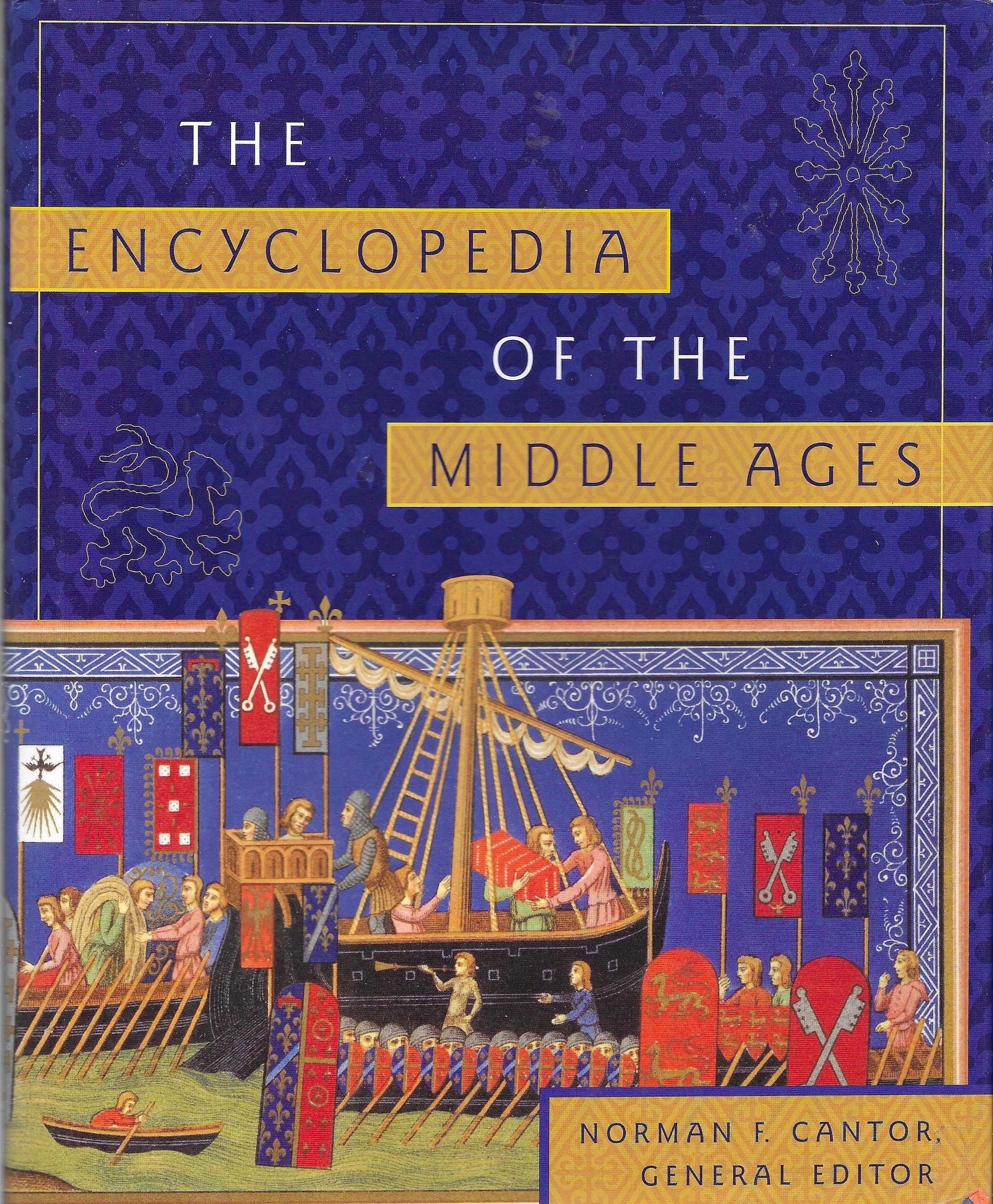
The Encyclopedia of the Middle Ages (EMA)
Norman Cantor General Editor 1999
THE WAR AGAINST THE JEWS } 1, 2
Judeophobia (or anti-Semitism, to use the inadequate nineteenth century, French-coin term redolent with the context of the Dreyfus affair) has its roots in three aspects of the Ancient Mediterranean world:
The struggle between Jewish Christianity and Pharisaic Judaism, reflected in the Christ-killing image of the Jews in the Gospel of Matthew,
The four centuries of conflict, including intermittent street fighting, between the Gentile majority population of Alexandria, at first pagan and later also Christian, and the large Jewish minority in the metropolis; and,
Fear of the Roman aristocracy in the first and second centuries C.E. towards the empire’s large Jewish minority (perhaps as much as 10 percent of the population) as well as resentment at Jewish rebellions. - twice in Judea, once in Alexandria - that were not easily suppressed.
All these factors flowed into the segregationist and repressive policy against the Jews in the Theodosian monarchy and the patristic view of the Jews held by St. Augustine and more negatively by Ambrose of Milan.
Faced with renewed Jewish freedom and prosperity in Muslim Spain, with the Carolingian protection of Jewish merchants and landlords whose economic services the Carolingians valued, and with a Judaising adoptionist heresy in the Spanish March, Alcuin, mentor of Charlemagne, saw the Jews as an internal threat to the transformation of Carolingian lordship into the Christian Empire. Ninth-century bishops like Agobard of Lyons perpetuated this vision of the Jews as conflicting with the transformation of the Frankish empire into a distinctive Latin Christian society of Europe.
Identity results as much from negative discrimination as from positive assessments. Jews provided the negativity, the "Other," against which the identity of Latin Christian Europe could be formulated. In the great wave of anti-Semitism that engulfed the Jews between 1050 and 1150, articulated by Churchmen such as Cardinal Peter Damian, Abbot Gilbert Crispin of Westminster (speaking for his mentor, St. Anselm of Canterbury), St. Bernard of Clairvaux, and finally the propagators of the blood liable among the Episcopal clergy of Lincoln around 1150, the transition inaugurated by Alcuin came to fruition: Europe would not tolerate jury. Europe was a Christian society, a Latin patristic civilisation from which the Jews must be excised.
Given impetus by the Crusades, and sanctioned by the slow but steady withdrawal of protection of the Jews by royal governments as the developing Christian bourgeoisie made the Jews redundant as merchants and bankers, European identity through phobia was forcefully defined by Bernard of Clairvaux around 1140.
The theme that the Jews intrinsically had no place in a European civilisation committed to Latin Christianity found repeated affirmation in the period from 1890 to 1945, not only among the Nazis, but in French, Bavarian, and Polish Catholicism, and in the High Anglicanism of T. S. Elliot, who made this a central theme in his 1931 lecture tour of American compasses, addressing cheering ones in football stadiums.
(Stilled momentarily by the shock of recognition generated by the Holocaust, the anti-Semitic theme slowly and ominously seeped its way back into European public discourse).
END
Comment
Today, 22 June 2026 already it is 27 years since this work was published in 1999. Therefore read with the perspective on the basis that the last quarter century will have revealed much new evidence and, more importantly, to read this work as I would have read it in 1999 with the mindset of that year which for me would have been of a man aged forty-six years. It is a phenomenal work and accomplishment.
My entire life since infancy has been fully aware of the Holocaust. In 2026 we have the horror of Sunday, 7 October 2023, the consequent Israel Gaza War, the Israel Lebanon War and the American Iran War.
I visited Israel three times across the 1990s – 2000s.
As it is presently constituted, Israel is governed by a faction in the Knesset that is a mirror image of the Third Reich, so it is quite understandable how the world is once again turning violently against both Israel and the Jewish Diaspora. The wax and wane of every century is as permanent as the wax and wane of every moon.
This time, is different. And this is frightening. It is for Israel to pull herself back from the brink.
Kenneth Webb
22 June 2026
All Rights Reserved
Liverpool and Gloucestershire
© 2026 Kenneth Thomas Webb
Notes
1 INTRODUCTION by Norman F. Cantor – THE MIDDLE AGES: DISCOVERY AND IDENTITY
2 SOURCE EMA Introduction page 9 (1999) by Norman F. Cantor