Every Century is Challenged
Gloucestershire
Every Century is Challenged
June 2026
Page 1
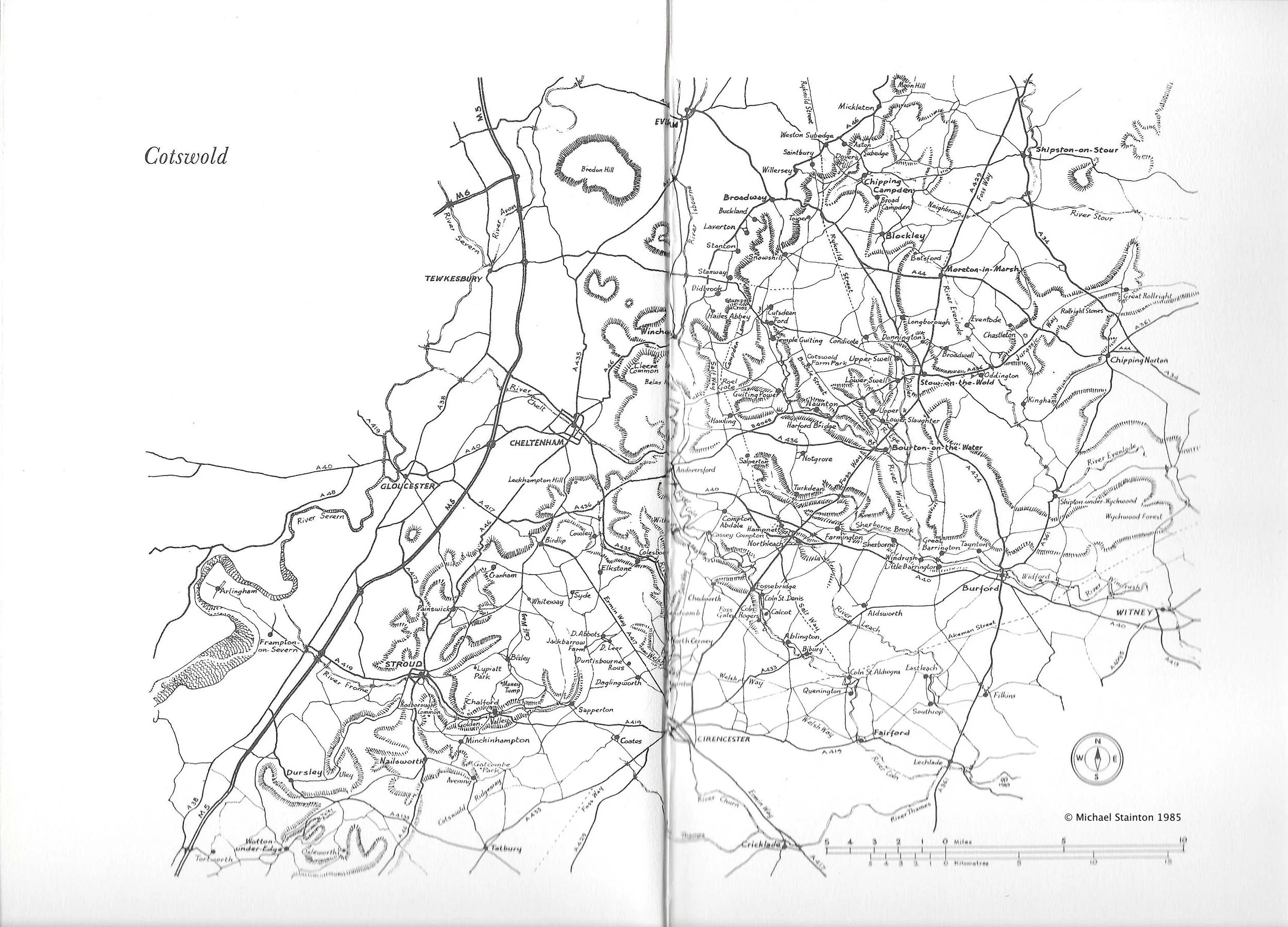
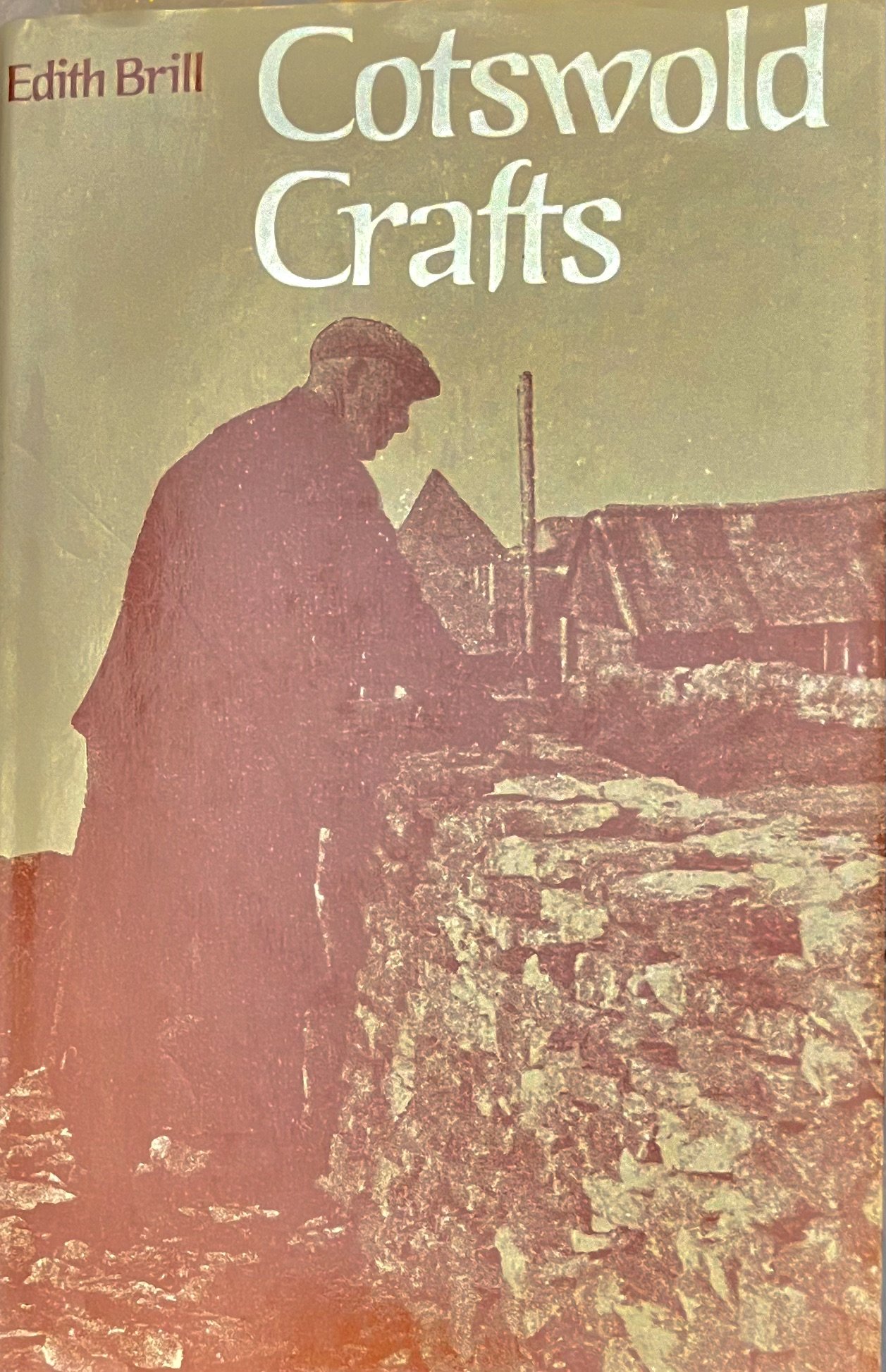
This Map so beautifully drawn by Michael Stainton and which appears on pages nine and ten of COTSWOLD WAYS by Edith Brill Illustrated by Michael Stainton first published in 1985 by ROBERT HALE Clerkenwell London Great Britain
Introduction
by
Kenneth Webb
In this 21st Century, we are increasingly challenged by the inevitability of artificial intelligence. This is not without foundation.
Even a cursory glance at any history book across the last five hundred years, one thousand years, fifteen hundred years and two thousand years, reports how the development of humankind is a challenge in every century.
Things come, things go. Things often remain with us for several centuries until they too depart, and that departure can be seismic.
I write not of war, insurrection, violent revolution, religious cruetly, famine, plague, pestilence, empire, defeat. I write of ways of life, of industry and commerce, of invention, of revolution in industry and commerce.
Page 2
In each century we learn to adapt. Adaptation is painful. Ways of life pass into history, ways that have often spanned many centuries.
I live in the Cotswolds, today a favourite tourist destination. Yet Cotswold was founded upon wool and cloth. Wool underpinned Cotswold life for more than two thousand years, encompassing the arrival and departure of the Roman Empire, the thousand years of the Middle Ages between 550-1550 CE (AD), and then the cracks beginning to show consequent upon the Agricultural Revolution and the Industrial Revolution - two consecutive centuries (1700-1899) - both at one point seemingly running alongside, clipped together by the British Enclosure Acts that spanned three hundred and ten years from 1604 to 1914, and continuing aggressively from the 18th and well into the 19th century (1750 to 1850).
Then the might of that Industrial Revolution exploded outward and globally from the British Isles to create the largest empire in history that reached every part of the world – the British Empire and its Commonwealth.
Page 3
Thankfully, that empire dissolved shortly after the Second World War (1939-1945) but it also did something extraordinary and which we rarely find, if ever, in any other empire.
The empire metamorphosed into a commonwealth.
That Commonwealth initially comprising eight nations, very quickly grew; it, too, then metamorphosed from the British Commonwealth into what we now know as the Commonwealth of Nations comprising fifty-six nations in 2026. In effect, a mirror of the British Empire at its height, with its headquarters in Marborough House, London. This is extraordinary. Because this whole process has also resulted in the English language being ratified by the United Nations as the formal international language for both diplomacy, trade and international travel.
All of this change comes about with cost in life, cost of traditions; indeed, an unstoppable change. And unstoppable change is akin to the pangs of birth that only women truly comprehend and understand.
Take the wool and cloth trade in Cotswold, a vast area of land now the largest of the United Kingdom’s prescribed National Landscape spanning six counties ~ Gloucestershire (containing the largest portion), Warwickshire and Wiltshire, parts of Oxfordshire, parts of Worcestershire, and Bath and North East Somerset. In fact I recall as a child that Gloucestershire comprised both Bristol and Bath, such was the extent of the old ceremonial County.
Kenneth Webb
Page 4

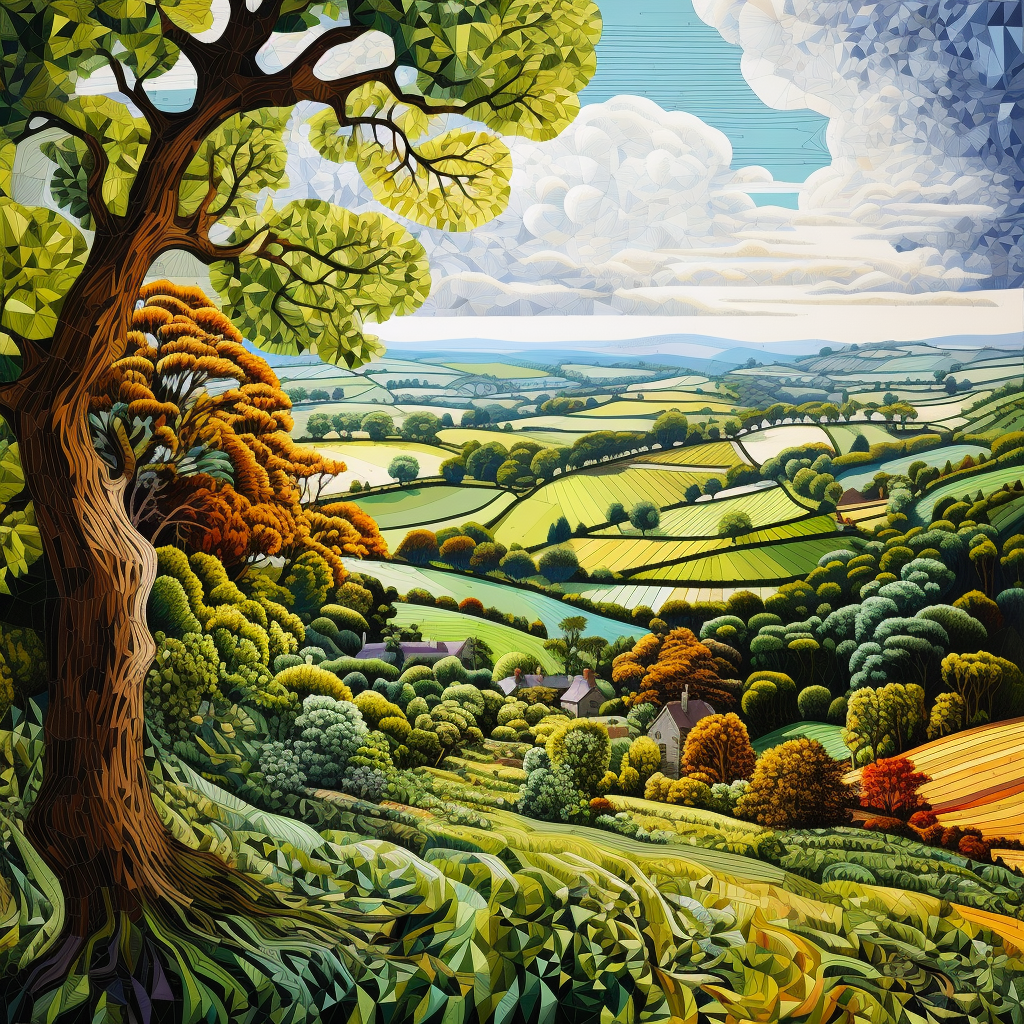
The High Wolds as I recall in the mind’s eye looking towards Stow-on-the-Wold in 1980 where I was stationed from the A40, and quartred four miles further on at Moreton-in-Marsh police station. I loved those quarters, looking out onto Moreton high street. My rooms went across the old cells, although in 1980 we were not using them, and they were nevertheless maintained in pristine order should the need arise. More often, they were used as a means of “sleeping it off”. We had the car keys locked away, and they were only too grateful to see another very helpful side to the policing of that long gone era. KW Digital Art by KTW using Midjourney.
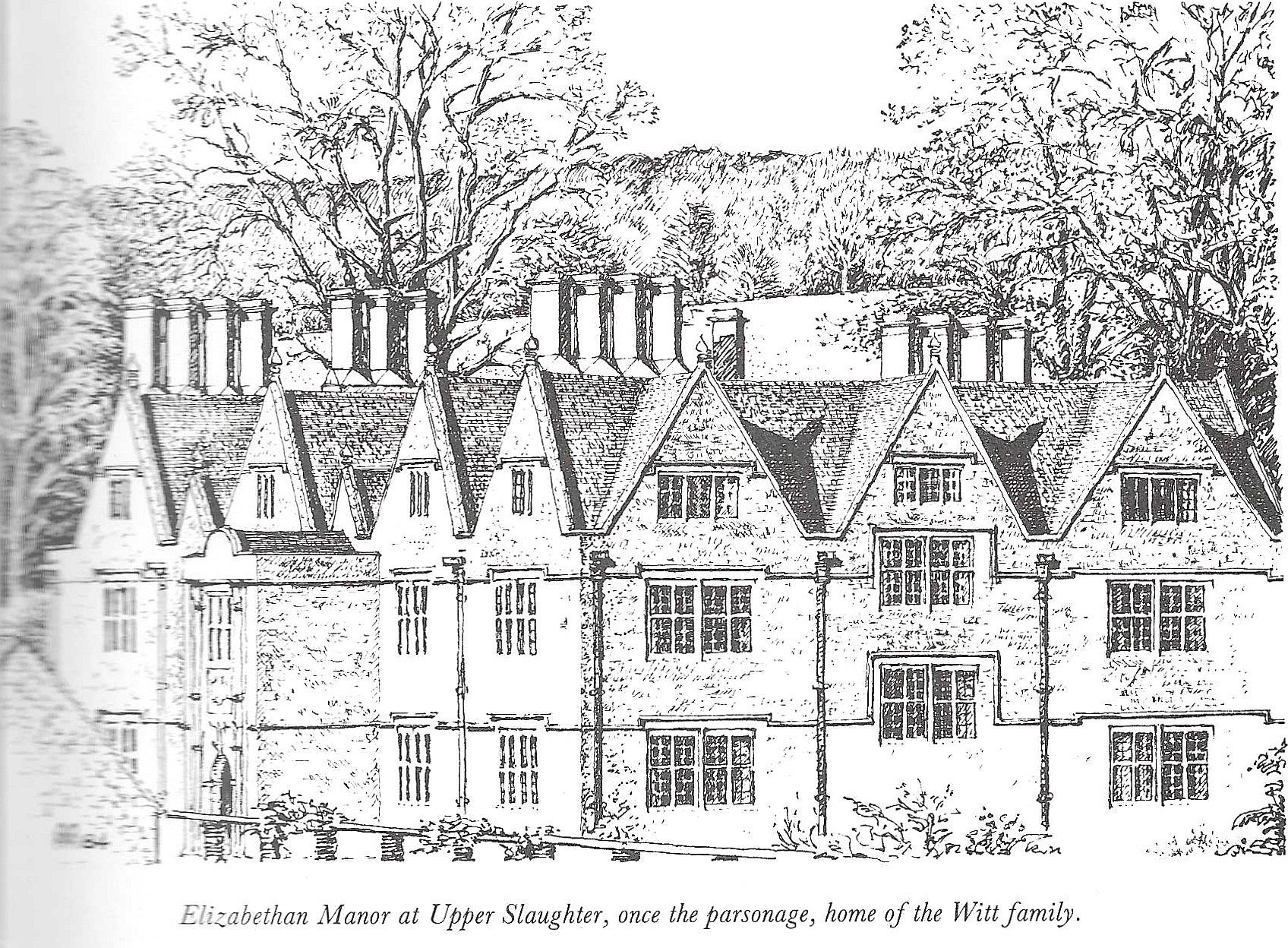
This beautiful renditon of the famous Elizabethan Manor is by Michael Stainton © Michael Stainton 1985 and appears on page 9 of my copy of Cotswold Ways by Edith Brill; and to Mr Stainton and his estate all rights are reserved.
My paternal grandparents, Isabel and Horace Webb, lived at Eyford Lodge Lower Swell, a stone’s throw from the Slaughters (Upper and Lower), Horace being the Coachman-Cheuffeur to the Cheetham Family at Eyford Park between 1913 until the very early 1920s, Grandad’s employment giving way to serving on the western Front. After the Great War, the family moved to Cheltenham where Horace was in service to Miss Bellhouse at Cotswold Grange, Pittville Circus. This continued on through the 1930s and through the Second World War, and our grandfather spoke very highly (according to our father Desmond Webb) of General Hastings Ismay - later Lord Ismay - and first NATO Secretary-General, the cousin of Miss Bellhouse, a Canadian Timber heiress. I mention Canada because our parents’ brothers both served within the Royal Canadian Air Force during training overseas before returning for operational duties with RAF Bomber Command. There is an indelible link between Britain and Canada to this day including our shared Constituional Monarchy. KW June 2026
Page 5
In Cotswold Ways by Edith Brill (1985), Edith writes…
… Cotswold comes within that belt of oolitic limestone lying diagonally between the Humber }1 and the Dorset coast, the highest and widest part being in Gloucestershire. For me the heart of the region, some forty miles wide and twenty broad, ranges from north of Wotton-under-Edge, east of Gloucester and Cheltenham, with Burford and Lechlade in the south.
This boundary covers more ground than the original definition, for in the beginning it was the name given to the high Wolds between Winchcombe and Stow-on-the-Wold and was derived not only from the Anglo-Saxon for “high, open land” but from COD, who was a Saxon chief who settled there some fourteen hundred years ago.}2 The valley became “Codsdean” or, Cutsdean, }3 [today] and the hill country above became Cotswold. As the centuries passed, the name came to be used for the south of the region also, and it must have been firmly established by 1791, for BIGLAND wrote at that time of…
“Bisley, near Stroud, the last parish of that division of the country called Cotswold.”
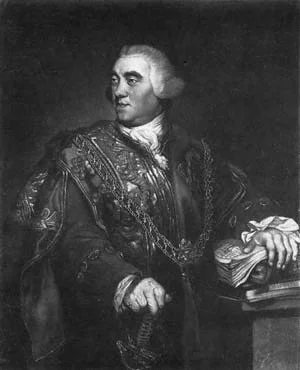
Ralph Bigland (1712-1784)
Major parts of his work were published posthumously in 1791 by Richard Bigland }4
Page 6
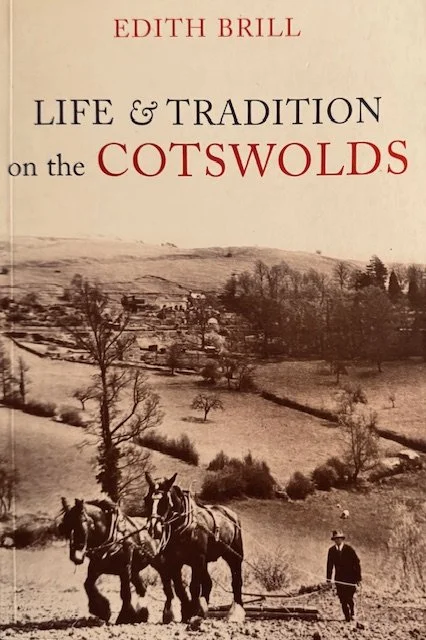
Edith goes into a much more detailed description and which is quite beautiful to read. But for the purpose of this article, my eye was caught by her narrative relating to the decline of Cotswold and which she beautifully describes, the style of writing unique to her and to her authority on Costwold. KW
〰️
Allow Edith to take up the pen again…
Until the 19th century Cotswold was a complete industrial as well as a complete geological unit, its natural resources combining to earn its livelihood. The abundant supply of stone was easily quarried, each parish having its own quarry and some supplying fissile stone suitable for roofing slates. Below were the oolite layers of fuller’s earth for fulling the cloth, while the porous nature of the rock also meant that surface water no longer able to seep through burst out as springs where the limestone met the fuller’s earth. This meant that springs of pure, clean water were available for domestic and industrial use, while the streams and little rivers provided power and, in the case of the Windrush at least, transported stone between the quarries at Barrington, Taynton and Burford to the limits of the region where the Windrush joined the Thames and so on to London.
Because of the porous nature of the subsoil, the sward }5 of the sheep-walks was sweet and clean, a mixture of herbs and grasses kept delicate by the nibbling of the sheep, and this good pasture improved the quality of the wool which made England famous in the Middle Ages. The wealth it brought to the wool-men helped to pay for the building of such churches as those that Chipping Campden, Northleach, Fairford and many another, for the wool-men hoped their benefactions would ease their entry into Heaven after death. Also, because of their close contact with the Low Countries, Cotswold was enriched by European ideas of architecture, art, and culture, the wool-men being as much at home in Flanders and Calais as they were in England. Even the peasants gained something from this trade in wool. Many of them managed to keep a few sheep on common land and to sell the wool to the factors who came at sharing time to buy quantities large or small. Sometimes, when the demand was great, they were glad of scraping together as many fleeces as possible by any means.
Page 7
Further Pause in Extract
I pause. Immigration is not solely related to the 21st century. Migration, often forced, has been an ingredient of every century in every part of the world since recorded history began. Migration brings with it great pain and suffering to all people. We have to learn to deal with it and we have to recognise that there are people even today, especially in this very troubled and dangerous 21st century, who would quite happily embrace the horrendous of Nazi doctrine, final solution, ethnic cleansing and extermination. Such people must in every case be resisted and be defeated. We can only survive as civilisation if we are multicultural and we have a global outlook. }6
Let Edith Brill continue…
When the wool trade gave away to the trade in cloth, England benefited greatly by the arrival of Flemish weavers persecuted for their faith in their own country who fled to England. As the manufacture got under way, cloth instead of wool was exported, the rivers and streams providing the power, and here again local conditions provided the necessary elements to make the Stroudwater Reds, the Uley Blues, and the fine black broadcloth that was so hardwearing that suits made from it were handed down from father to son.
The clothing trade prospered greatly, producing several generations of gentlemen clothiers, some of whom used their wealth to buy manors and manor-houses in decay from ancient landowning families, getting out of the cloth business while the going was still good, for it was a trade that did not last.
I pause again…
Today, we are facing the challenges of artificial intelligence, a revolution in industry and commerce and in every walk of life that is moving at such a pace that many are left overtaken, breathless, some even overpowered and defeated, losing sense of purpose, sense of direction, their desire to live.
When the steam engine was invented, people were shocked. Exceeding the speed of a team of six horses would surely bring death.
When the Church finally - after complete denial for well over a century after Galileo’s discovery, putting that man through ‘hell’ so to speak and requiring him to reverse his findings and leaving him destitute - accepted that indeed the Earth is round and not flat.
We must not become 21st century Luddites people who dislike or resist any new technology and any form of automation. }7
When the internal combustion engine – often referred to by people at that time as the infernal combustion engine – again stated that to travel at more than 30 mph would mean death by suffocation because people would not be able to breathe in excess of 30 mph, we have the same action in those two instances as we have now with Artificial Intelligence.
Page 8
We have to adapt.
In every previous revolution, humankind had agency. Humankind directed the way in which that particular revolution would evolve.
For the first time we are faced with a revolution, evolving at breakneck speed, in the form of artificial intelligence that just might, gain agency.
In other words, ‘agency’ would mean that it has a mind of its own.
I am an optimist and I do not believe that this will happen. That millions of people around the world understandably do not share my optimism, especially when they see their lives, records and even ways of life and existence threatened, or even removed completely, is frightening.
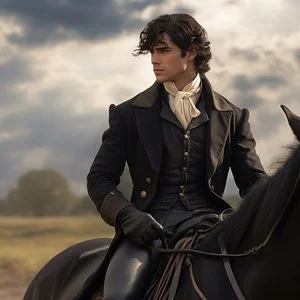
The Gallops south of the Cotswold Escarpment circa 1850 Digital Art by KTW IBM via Midjourney (2024)
So, let us return again to Edith Brill…
Page 9
By the end of the 18th century the rot had set in, and at the beginning of the 19th century trade had been steadily eroded and finally killed by the mills of the north using steam power and factory methods to produce the greater amounts of cheaper, more fancy kinds of cloth demanded by the increasing population. The Clothiers of South Cotswold, unwilling or unable to change over to steam power and cheaper cloth or from lack of capital, after many bankruptcies had to recognise that the days of cloth-making on Cotswold were over, though in the Stroud area a few enterprising mill-owners went over to steam power. Thousands of spinners, weavers, tuckers, combers and others were thrown out of work, and there was much hardship on Cotswold.
Families starved, some managed to emigrate, others fled to work in the mills of the north of England. The decline occurred at the time of the Enclosures, so that the weavers lost not only their jobs but the right to keep a cow or a few geese on common land, which had at one time supplemented their earnings. They could not work on the land: their hands were too delicate, having been kept smooth for their work; their physical condition was generally poor, because of the sedentary lives they had led, and the agricultural workers themselves were so poorly paid that many had to have parish relief to enable them to feed their families, }8 though they worked long hours.
Cotswold‘s one-time importance in the national economy was forgotten, and it became a remote region, difficult of access because of its ‘wild rough hills and rough uneven ways’ as anyone who remembers the narrow lanes winding up the steep hillsides before the last world war can testify.
“... it became a remote region, difficult of access because of its ‘wild rough hills and rough uneven ways’ as anyone who remembers the narrow lanes winding up the steep hillsides before the last world war can testify.”
Page 10
Conclusion
Writing this article and I admit with the benefits of artificial intelligence, I have had much cause to reflect upon the Agricultural Revolution, the Enclosure Acts, the Industrial Revolution, the Luddite movement and how the Cotwolds that I grew up in and still live, have changed.
When I was six, we lived in Stroud in our second police house on Whiteshill, and I remember the view out across the field into the deep valley wherein sat the town of Stroud. I remember the Hills on the other side rising up. But I have never thought of this now until I read Edith Brill’s reference to the Stroud Mill Owners. Because I remember to this day, so clearly, the outline of the mill and it's huge chimney on the skyline, that to a six year-old seemed as if it was reaching to the sky.
Artificial intelligence is a natural evolution in humankind. I dismiss without a thought any arguments by people of any and every religion. I understand their concerns but I will not fall in step with them and become a 21st century Luddite.
As we can clearly see from what Edith Brill has observed in the 20th century - and Edith is doing so against the backdrop and, thereby, perspective of two world wars - that time does not stand still, progress does not stand still and we must move with the times.
I am mindful that in certain regimes, some autocratic, some tyrannical, there is an insistence that everyone must return to lives of servitude. Music is strictly prescribed or at worst banned. Women walk behind the man. The do not speak unless spoken to. Servitude and minimal education is all that is required of them, and their bodies are not their own but for the use of their husband and other men without objection.
The voices of Winifred Holtby, Vera Brittain, Baroness Shirley Williams, Virginia Wolff and countless women and open-minded men ring through into this 21st century.
It is well documented that in his final days in the Berlin Bunker, Adolf Hitler spent much time admiring the spectacular model of the city that would represent the thousand year Reich. Let that be a salutary warning to us all in this very, very dangerous 21st century.
Rome burned while Nero fiddled
}9
14-19 June 2026
All Rights Reserved
Gloucestershire and Liverpool
© 2026 Kenneth Thomas Webb
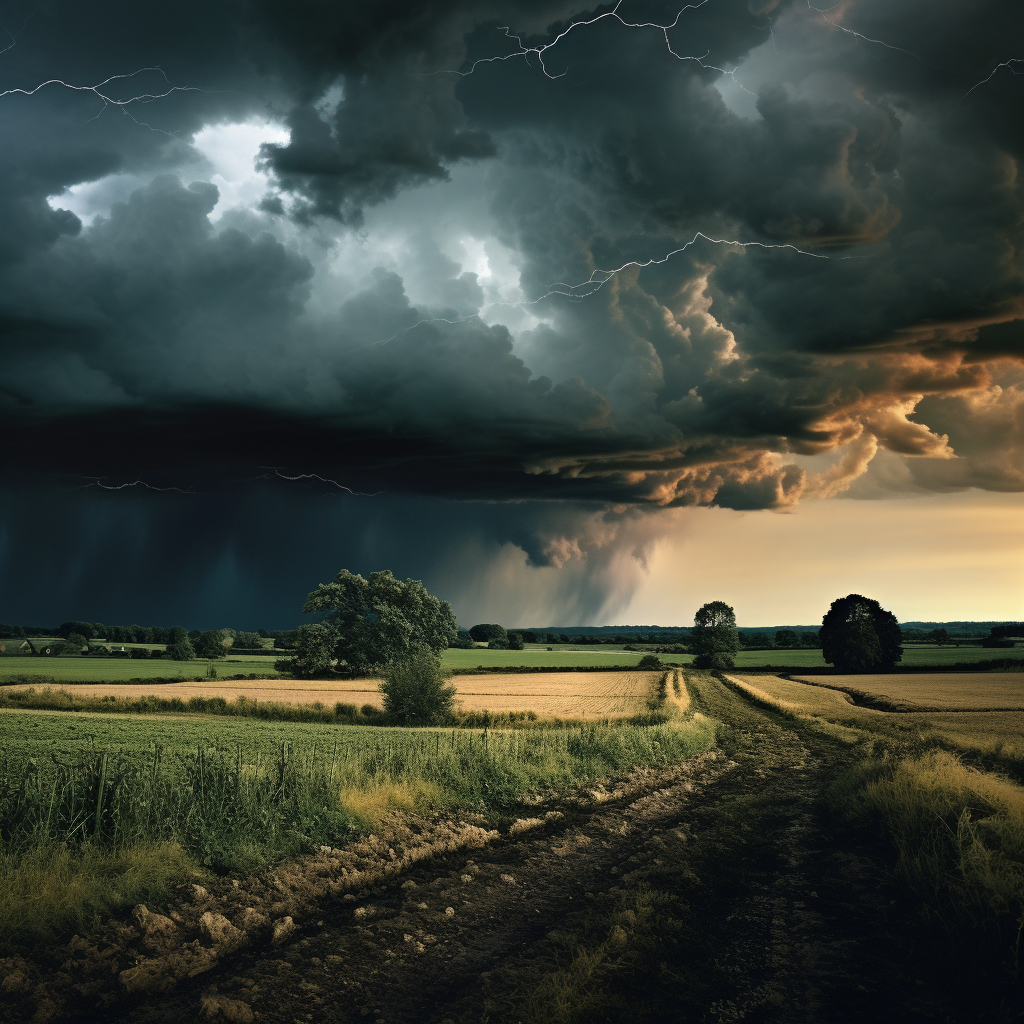
High Summer Thunderstorms over Cotswold by KTW - KTW IBM digital art through Midjourney (2023)
End Notes (})
the Humber estuary is located on the central-eastern coast of northern England, directly bordering the north Sea. It lies straight east of the city of Leeds and the Yorkshire Wolds, serving as a natural boundary between the East Riding of Yorkshire to the north and North Lincolnshire to the south.
circa 585 CE (AD)
as it is known today in 2026
English antiquarian Ralph Bigland (1712–1784). While he died in 1784, his most famous masterwork, the Historical, Monumental and Genealogical Collections Relative to the County of Gloucester, was famously published posthumously starting in 1791.
An expanse of land covered with short grass or turf. The term often implies a well-kept, lush area of grass (such as a lawn or pasture), and is frequently used in a literary or poetic context.
President Alexander Stubb of Finland in his work The Triangle Of Power – Rebalancing The New World Order published in 2026
The Luddite Movement apparently dates back to 1779 when a legendary apprentice, Ned Ludd, smashed two mechanical knitting frames in a fit of rage. As the Industrial Revolution gathered speed, so did widespread protests, beginning in Nottingham in 1811, when highly trained artisans broke into factories to destroy the mechanised equipment that threatened their specialised trades. The character Ned Ludd was a myth, following that other mystical person of the Middle Ages, Robin Hood. Workers claimed to follow this Ludd’s direct orders, sending threatening letters to factory owners, signing manifesto's in his name.
Today’s Foodbanks
Attributed to Tacitus (c.56-120 AD), Suetonius (c.69-122 AD) and Cassius Dio (c.155-235 AD). The fiddle did not of course exist druing these periods, and whilst William Shakespeare in Henry VI, Part I wrote “Play on the lute, beholding the towns burn”, the royalist playwright George Daniel (1649) was one of the first to put ‘fiddle’ in print regarding Nero ~ “Let Nero fiddle out rome’s obsequies.”
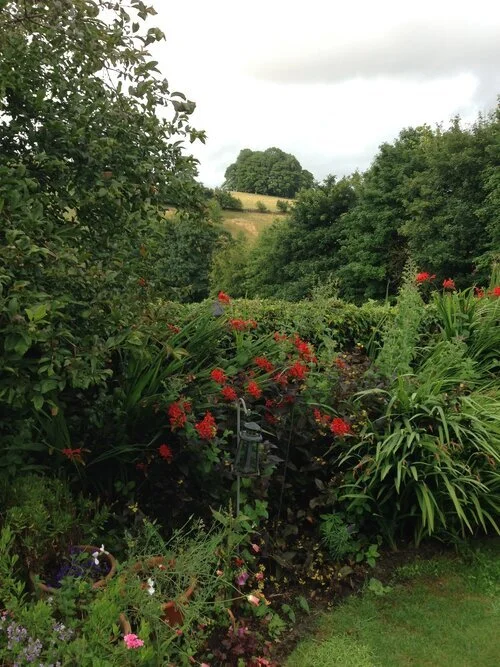
Banner Image is of The Copse from the Lower Lawn in Cowley Village, Gloucestershire (KW 2017)