RAF 13 'Johnny Kinsman' by John Watson ~ The Halifax Squadrons (Short Book Review)
RAF 13
THE HALIFAX SQUADRONS
A Book Review
I
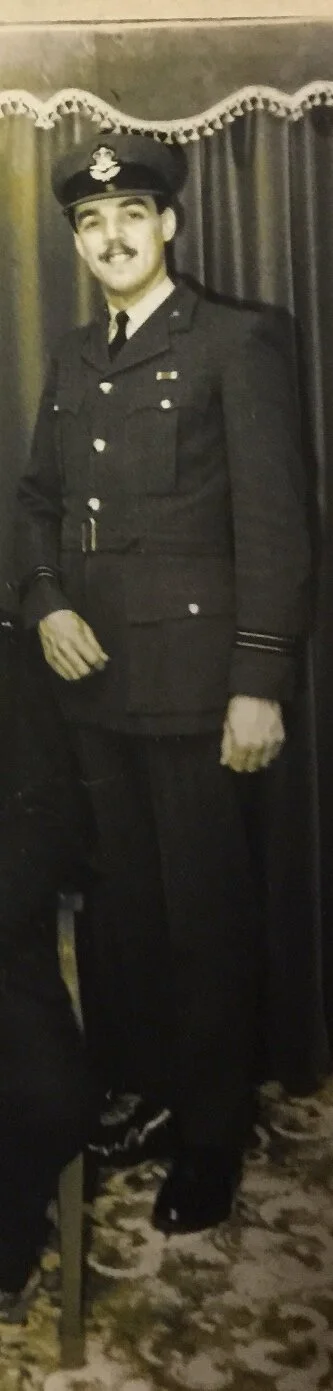
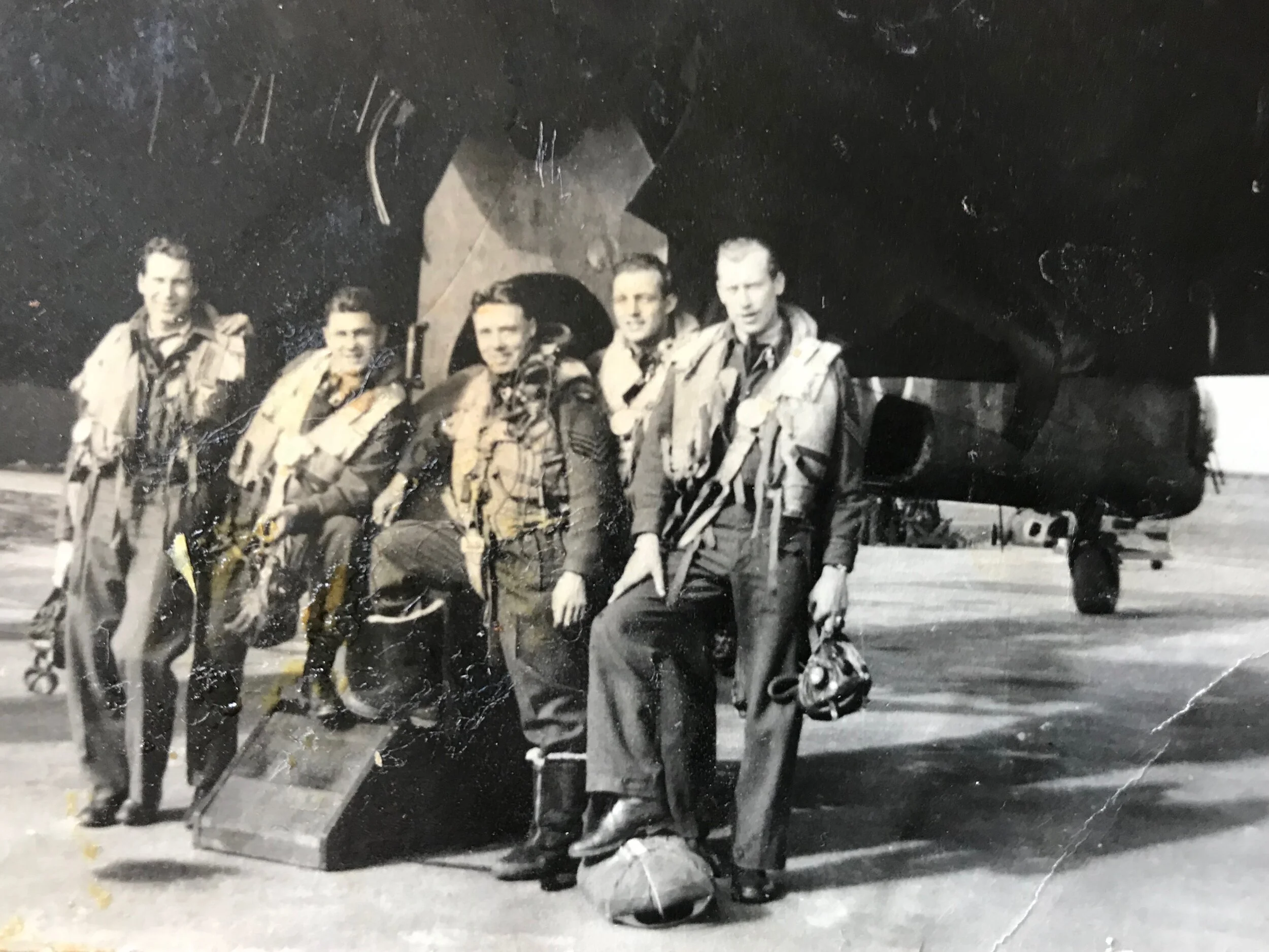
THIS TITLE was recommended to me by the nephew of the flight engineer on my uncle's Handley Page Halifax DK165 MP-E of which he was the pilot and skipper, Sgt-Pilot Kenneth Ernest Webb RAF VR 1315766, 76 Squadron Royal Air Force, and taking to the skies from Linton-on-Ouse.
The aircraft was shot down and six of the seven Webb Crew were lost, the mid-upper-gunner coming down in the tail section when the aircraft broke in two, and mercifully surviving. His war continued even in captivity, as Sgt Leslie Mitchell refused to accept that being a prisoner of war meant that he must sit out the rest of the war. This tenacious Canadian made several attempts to escape.
II
At last I have a book that writes exclusively about the Royal Air Force and Royal Canadian Air Force Squadrons that flew Halifaxes.
My other uncle - Flight Sergeant Harry Alfred Marshall RAF VR 1337884 - was a flight engineer on a Lancaster which was also lost. He, too, flew Halifaxes.
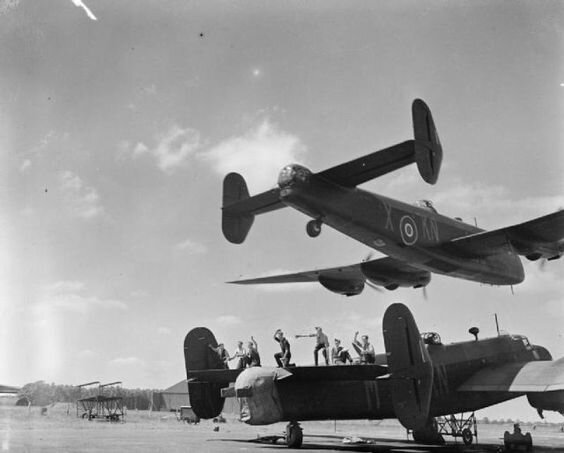
Our family has always felt slightly off-kilter that the Halifax flies in the shadow of the Avro Lancaster, understandably but unacceptable, because the Handley Page Halifax was, itself, a remarkable aircraft, with a wider wing span, and loved by the Crews who flew them and serviced them. It is a great relief to discover in family records that he, too, served a tour on Halifaxes before being posted to 405 (City of Vancouver) Squadron RCAF - one of the elite Pathfinder Squadrons - Avro Lancaster PB402 LQ-M, likewise lost with all the Payne Crew in 1945 when they made their last flight from RAF Gransden Lodge.
III
The fact that the author writes in 1955 means that he writes with authority and direct knowledge.
This is just ten years after the war’s end, and Mr Watson writes also as one of those aircrews that flew Halifaxes. He writes at a time when it was clear that the general public preferred not to know about the role of Bomber Command, the Strategic Air Offensive, of the 125,000 aircrew personnel who served in that command - all volunteers - nor of the 57,205 of that number who did not return. They did not wish to know of a forty-six per cent death rate, of an aircrew’s awareness in March-April 1943 that their average life expectancy was four operations. The general public did not wish to know of the number of wounded-in-action amounted to 8,403, nor, that of that these 125,000 aircrew personnel, 9,838 became prisoners of war.
IV
The public’s volte-face took on a very belligerent tone when it was made clear that no campaign medal would be struck for these 125,000 members of aircrew personnel, and marks one of the British People’s less impressive moments.
Men remained silent. In my own service, I have never once met any aircrew who gloried in the task demanded of them; in fact, truthfully, I was often unaware of their war service. If a person had a DSO or DFC and did the arithmetic, one did not ask what had led to that decoration. This was exactly the same following the First World War. Not until the late 1970s did my maternal grandfather speak of that war. Three brothers joined up, he alone came back. That was that.
World War II was Total War. Armchair historians and the armchair British yawning public of today are largely disinterested in the events of a previous century.
But had things not gone our way, history reveals now a future for a conquered Britain that is too hard to fathom. Their plans for Liverpool and for Edinburgh - had Operation Sealion succeeded - subjugating by ruthless example two cities as a warning to the whole of Britain, are chilling. The armchair historian prefers the notion that Hitler wished no harm to Britain, he respected Britain and would allow her to keep her empire which, they say, he greatly respected, just so long as they accepted his free hand in Europe.
We have only to ask the people of Poland what subjugation meant to them.
V
Anyone having an interest in the Handley Page Halifax will find an extraordinary, moving and at times, emotional account. It is also a wartime love story. Sex lies within the pages, as fleeting as in real life, for we are here today, gone tomorrow.
It was on my second reading that the emotional side came out, for this time I knew Watson's fictional character Kinsman before, during and after. On my third reading, I discovered the exact same process but, this time, relating to all the other characters, and something else too. My love for the fierce loyalty and independence of the People of Scotland.
Watson also refers very directly, through his characters, to all the commonwealth air forces, as well as quietly reminding us that Kinsman is in fact a Scotsman, and this again resonated deeply, not only because I become impatient with the term 'English' being used to mean 'British', but also because my maternal grandmother was born in Scotland, although lived south of the border.
VI
John Watson writes with authority, precision and an un-emotion (notwithstanding my note above) that captures the stoicism of the people of that tumultuous time in our history, and he has left us a great legacy in this work. That, too, resonates, because today, I grow tired of seeing people on camera weeping about the loss of people of whom they know nothing. Why is it that people now feel that the moment they know a lens comes their way, they must gush with tears? I have no patience with them. But I discovered something else when being interviewed. Cam crews hope to see tears and will try every trick in the trade to get tears on cam. I am of the old school.
VII
It is my earnest hope that those involved directly in the conservation of the three Halifaxes remaining will recommend Kinsman for Kindle publication.
VIII
Some might say I am harsh. Unforgiving, even. Not at all.
As followers of this website will know, the greatest international relationship and friendship I have is with the German and Austrian Peoples, two very separate and distinct nations, but who, like many others, fell victim to the wiles of a total madman, a megalomaniac.
Dictatorship, populism, and extreme nationalism are as one, a stench to the nostrils, and Watson has succinctly reminded us all just what happens when true freedom and true democracy do not stand firm.
In a phrase, with such people, there is no negotiation.
13 February 2022
All Rights Reserved
Liverpool
© 2018 Kenneth Thomas Webb
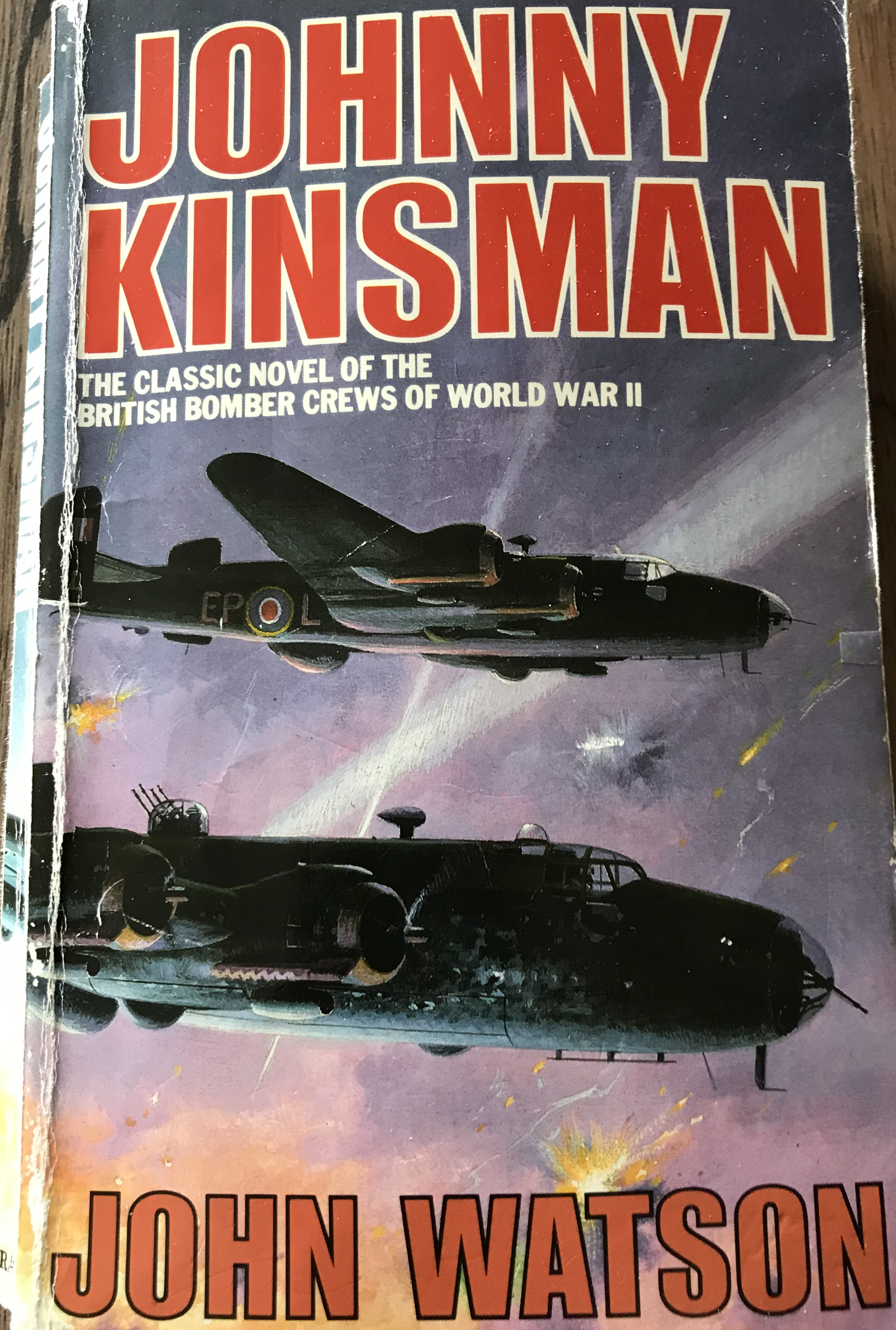
The Front and Rear Covers of a treasured book - and a brief glimpse into decades past
Written around 30 September 2018


Ken Webb is a writer and proofreader. His website, kennwebb.com, showcases his work as a writer, blogger and podcaster, resting on his successive careers as a police officer, progressing to a junior lawyer in succession and trusts as a Fellow of the Institute of Legal Executives, a retired officer with the Royal Air Force Volunteer Reserve, and latterly, for three years, the owner and editor of two lifestyle magazines in Liverpool.
He also just handed over a successful two year chairmanship in Gloucestershire with Cheltenham Regency Probus.
Pandemic aside, he spends his time equally between his city, Liverpool, and the county of his birth, Gloucestershire.
In this fast-paced present age, proof-reading is essential. And this skill also occasionally leads to copy-editing writers’ manuscripts for submission to publishers and also student and post graduate dissertations.