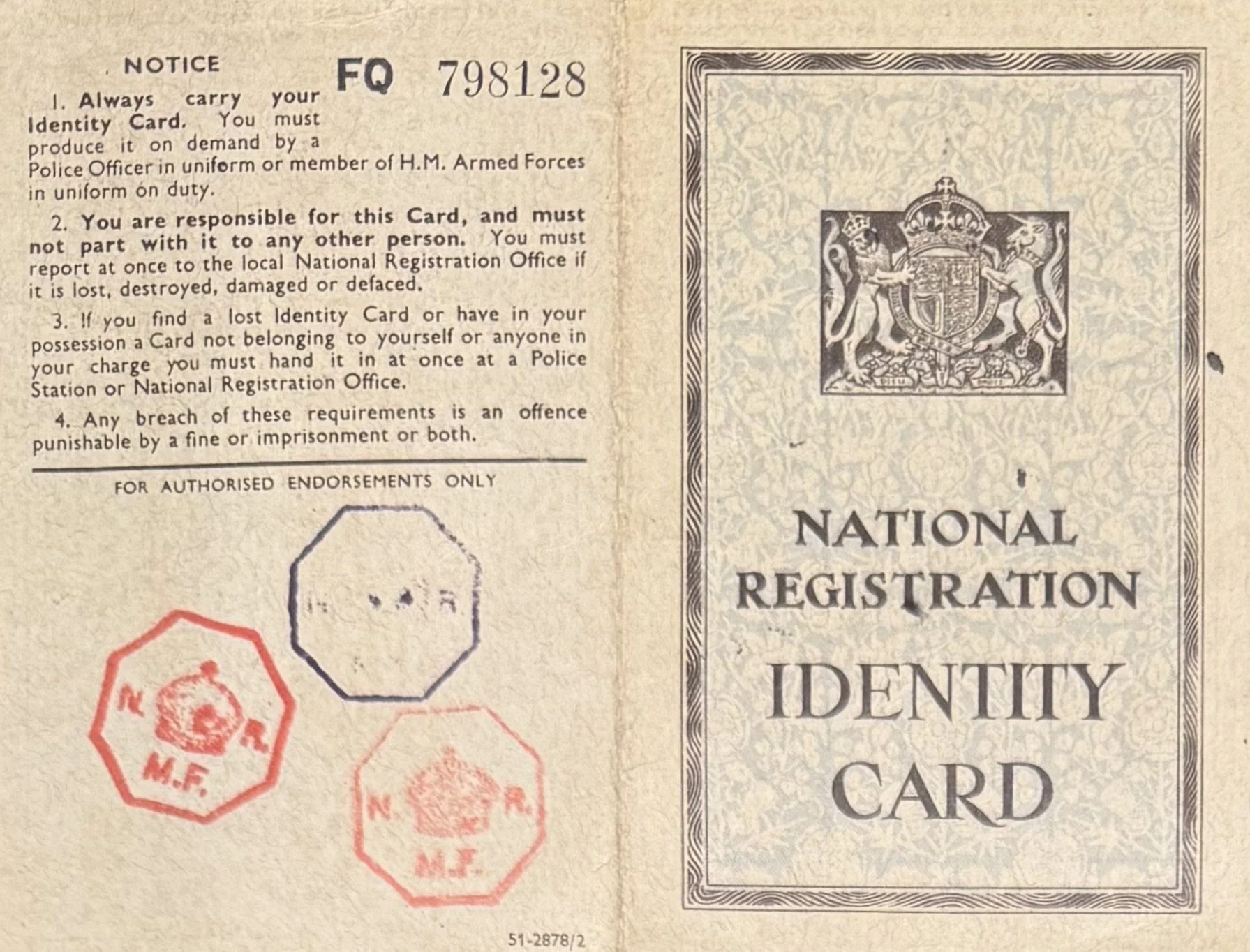
3 Mass Observation - Civilian Morale - 18 May 1940
Listening to Britain
Saturday 18 May 1940[1]
Civilian Morale[2]
EXTRACT
This report has been put together currently from a series of reports sent in by our observers over the last few months. In particular, the material collected since 10 May[3] is analysed and an attempt is made to show the implication for morale of present events.
For the sake of speed conclusions are given first:
Conclusions
On 18 May people are by no means prepared for the shock which awaits them. Many will undoubtedly manage to make themselves feel that bad news is not really bad, but many fewer people will be able to do this than in previous months, and the propaganda of events is inescapable.
It is suggested that the shock of the news can be offset by doing several things. There will be immediate necessity to ease the burden on each individual mind, to relieve personal fear, and to steady the bewilderment by which its nature leads to feelings of inferiority and futility.
1. It is imperative that people should not be rallied by the stock trick of recent years, 'the reassuring picture.'
2. At the same time it is bad to give people flat facts and to allow the exploitation of personal fears and negative imaginative terrors.
3. Fear needs to be expressive not repressive.
4. Thus, while private individual fears are bad, socialised fears can be made positive and turned to account.
5. Where personal fears exist an attempt should be made to liberate them. The fear of parachutists was strongly felt and privately held, particularly among women.[4] Eden’s broadcast offering an active solution (even though a partial one) was something aggressive and all our reports show that the broadcast did much to allay personal fears by transference to corporate action.
6. People should be made to share their fears: to fraternise: be neighbourly. Street unities should be thought out. Social workers should make personal visits. ARP wardens should call personally. Those who play civic roles should be urged to show themselves. The Queen might tour the streets. It is important to stimulate the feeling of being a united nation (at the level of the street as well as at the level of the cabinet).
7. Civilian leaders should be chosen and quickly built up. Some would be national figures, e.g. the Duchess of Kent, Gracie Fields, (for women specially).1. Interpreters should be chosen and be constantly at work. It is necessary for the news and for events to be interpreted and explained. Retreat and disillusionment engender bewilderment without the help of interpreted facts. Facts, even bad ones, are some protection against bewilderment and suspicion. Interpreters like Vernon Bartlett[5] should be constantly broadcasting, explaining each fresh phase and answering the many questions which remain unanswered hour by hour.
2. Even at the eleventh hour people are seeking and needing a positive purpose, something aggressive, dynamic, beyond themselves, worth dying for, not just survival or ‘blood, sweat and tears.'[6]
A Summary of Public Opinion
on the Present Crisis
ENGLAND
During the course of this afternoon a brief survey of public opinion was made in London and in the Regions (with the exception of Newcastle where the telephone was out of order).
The opinions expressed from the Regions were, of course, those of single individuals, and may therefore be biased in certain respects. But the consensus of opinions gathered both outside and inside London shows marked unanimity upon the major points.
The facts which most clearly emerged are that people are rather more depressed than frightened by the trend of events and that there seems to be confidence in the ultimate victory of the Allies. Nevertheless the gravity of the situation is generally realised.
There is a strong and widely expressed desire for definite instructions to be issued by the Government about what people could or should do to help the country and themselves at the present time. The feeling is that they would like to be disciplined, and would be glad to be given some precise duties or occupation to carry out.
The following is a brief summary of regional opinion:
LEEDS
Morale is on the whole fairly good, chiefly because everyone is working full-time. The new phase of the war and the realisation of facts hitherto unfaced has stiffened resistance.
No rumours are reported.
The campaign of open-air meetings put into effect by the Ministry is having a good response, and there have been no interruptions.
CAMBRIDGE
This morning there was optimism over the news, but there was some tension in Clacton and Ipswich over the re-evacuation order. There was also apprehension in Cambridge about troop movements, which was said to be for the purpose of combating a parachute raid. In the Chelmsford area there were rumours of parachute troops having landed and from the same place it was said that there had been bombing at Harwich. Similar rumours and apprehensions were reported from the King's Lynn area.
People would like more explanation on the radio about the military situation. ‘Onlooker’ is considered too ‘fatherly’.[7]
NOTTINGHAM
People are more depressed than frightened, though the fear seems to be growing. The opinion is generally expressed that it would be a good thing on this account if the Prime Minister - Neville Chamberlain - were to broadcast in a day or two.
No rumours are reported from this Region.
WALES
Although there seems to be a good deal of depression, people seem to be less frightened than angry. The way in which the news is announced by the BBC is considered to account for some unnecessary alarm, and it is suggested that a reassuring personality such as Mr Duff Cooper or Mr Eden (Secretary of State for Dominion Affairs) should give a short talk every evening during, but not after the news.
A rumour which is given general currency is that there is a large Fifth Column nucleus of German tourists in Eire.[8]
BIRMINGHAM
People are more bewildered and worried than they were yesterday, and would welcome instructions about what to do or how to act, providing these were of a definite nature. The point is made that Government speakers on the wireless would have a greater response if their appeals were directed to backing up the Services rather than the Government, which is much less of a reality to most people than the Navy, the Army or the Air Force.
MANCHESTER
The public is not so much frightened as depressed. Today for the first time the news seems to be bringing home to a good many people the real gravity of the situation. The majority in this area ignored the Government’s appeal to treat Whitsun Bank Holiday as an ordinary day.
The public would definitely welcome some sort of instructions about what they are expected to do in the present state of crisis. They would, in fact, like to be disciplined.
Rumours in this area are confined to exaggerated apprehensions about refugees arriving in great numbers.
BRISTOL
Public morale has been shaken by recent events, particularly in Bristol. In Gloucestershire, the news has awakened people; everywhere there is determination to win and the realisation that our backs are against the wall.
There are many evidences of rumours in the Region. At Gloucester aviation works it is rumoured that’s all men up to thirty-six are to be mobilised at once. At Exeter there has been a large water main burst and rumour has it that sabotage is responsible. Many rumours of air raids occur from time to time; one has it that all areas on the South East coast will be rated to drive people over to the South-West where they can be bombed collectively. At Gloucester people are saying we are not making enough aeroplanes as there is not enough material at the two aeroplane factories there to provide full time work.
People would prefer to know all the news, even if it is bad, and criticise the BBC news bulletins as having too little detail in them. They want German claims denied immediately. Exeter says: ‘Bad News should be dressed up’. Plymouth, Exeter, Bristol and other towns are asking when the casualty lists are coming out. They suspect the numbers are so large that the Government dare not divulge the numbers. Questions are also asked about how soon the Local Defence Volunteer Corps can act and why more enemy aliens are not in interned.
TUNBRIDGE WELLS
People do not seem to be frightened but are certainly more depressed than yesterday. General Gamelin’s[9]message has helped to account for this.
Nevertheless, confidence is expressed everywhere in an Allied victory. Most people seem to be prepared for the news to be temporarily worse during the coming weeks. There was a persistent rumour on Thursday last that Italy [10] had entered the war on the side of Germany.
SCOTLAND[11]
The public are undoubtedly more depressed than yesterday, but at the same time express confidence. The main sentiment seems to be that though we always lose the first battle, we always win the last one. (This point was stressed also by Mass Observation’s survey made in London during the early afternoon).
Most people seemed to be prepared for worse news to come but expect that this will be only temporary.
Observations made today in London largely confirmed the trends of opinion expressed in the Regions. The views of working-class people seemed to be on the whole rather more optimistic than those of other classes. So there is definite apprehension everywhere, and though the seriousness of the situation seems to be fully appreciated, there is also a feeling of confidence.
End of M-O Record
(Declassified)
for
SATURDAY 18 May 1940
My Personal Notes
SCOTLAND
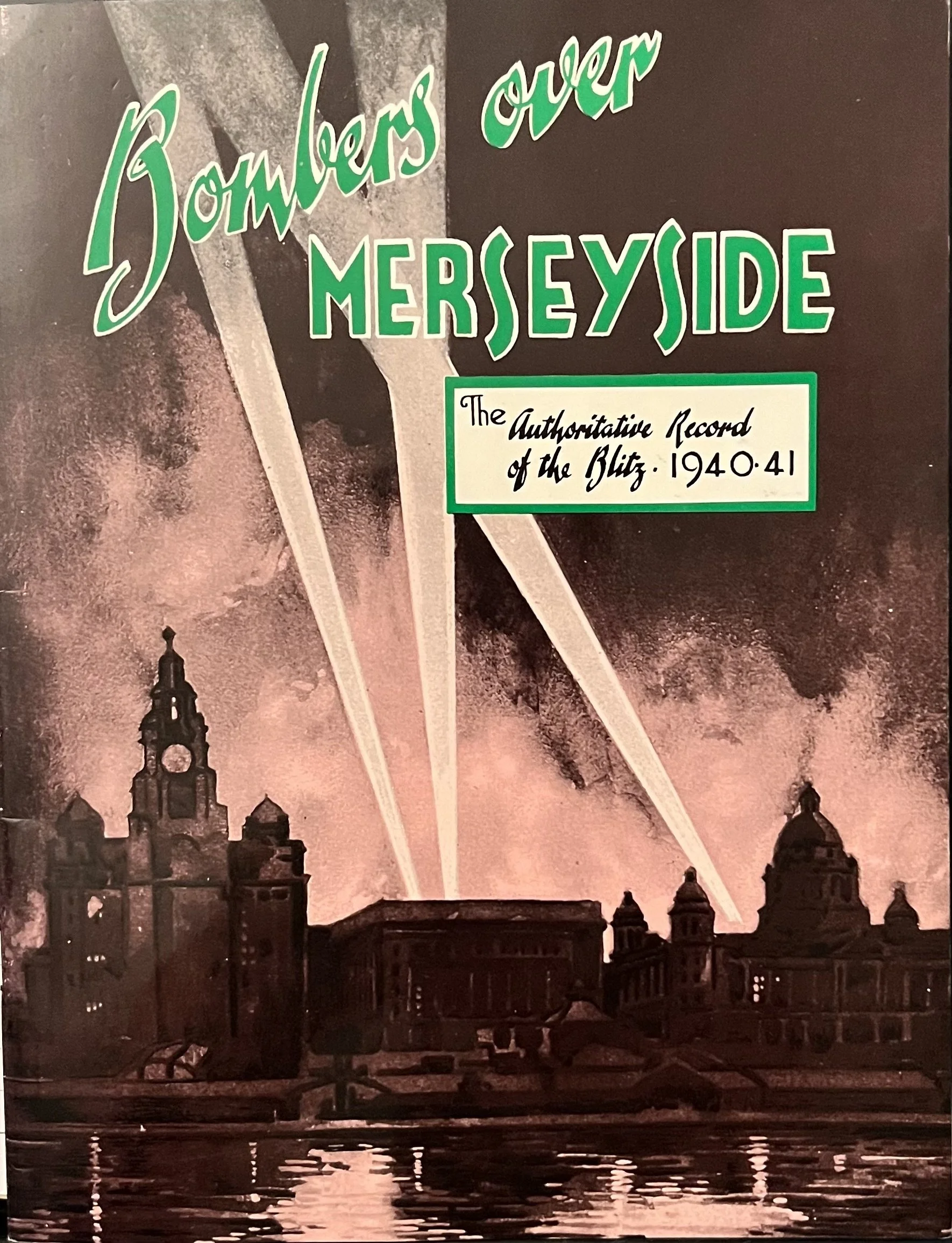
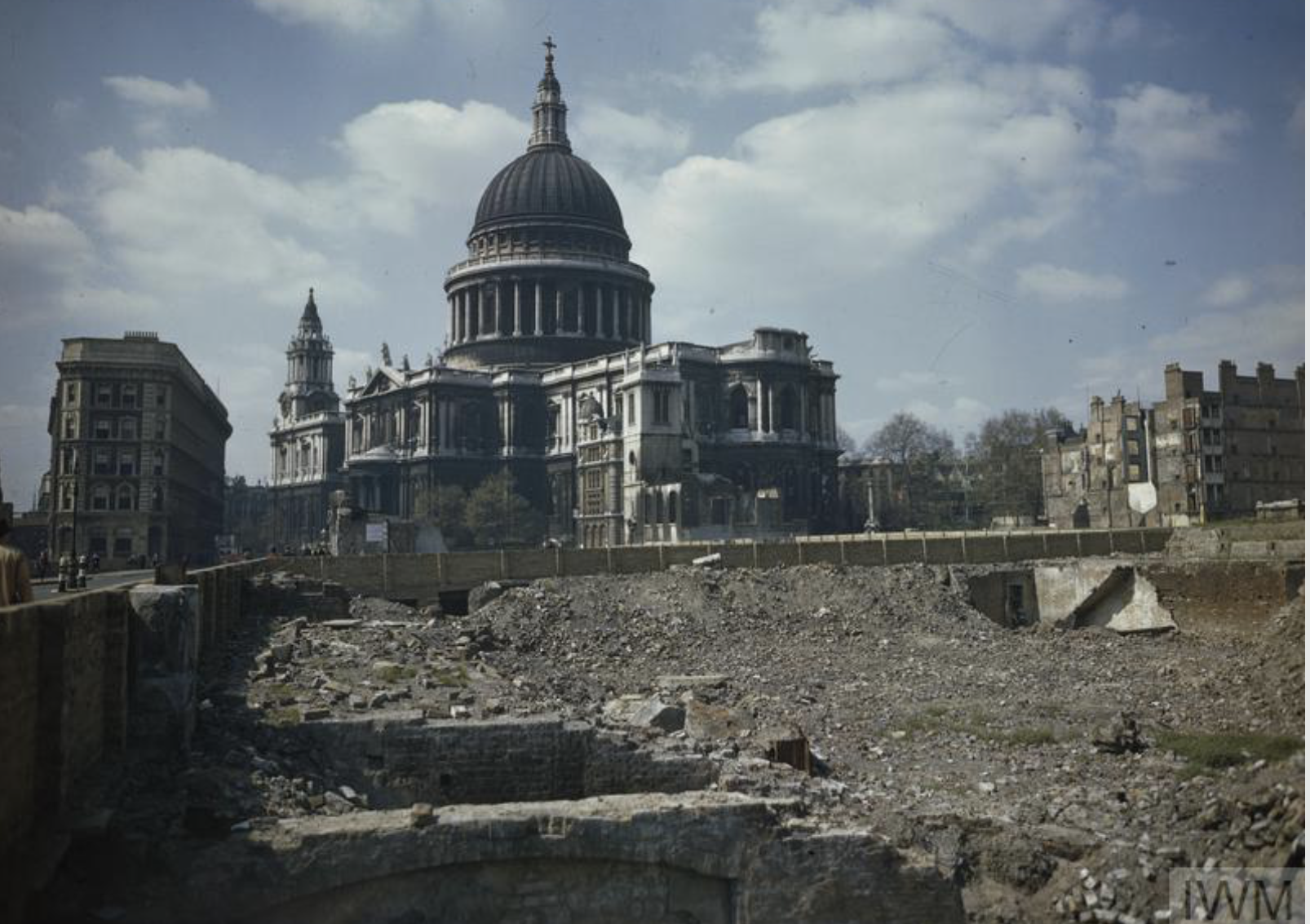
During World War II, Scotland was subjected to over 500 German air raids ranging from single-plane "hit-and-run" attacks to major bombing campaigns. The Blitz reached every part of Britain, indeed the British Isles.
In Scotland, the Luftwaffe targeted industrial areas, shipyards, and ports to cripple the British war effort, resulting in roughly 2,500 deaths and 8,000 injuries.
It is important to understand that the Battle of Britain is seen in this context. Too often research concentrates upon the south-east counties of England and the South Coast. German Maps used by the Luftwaffe show Great Britain with a single name running from south to north in large capitals. E N G L A N D. Throughout the War the enemy tended to call everyone from Britain ‘English’.
Fortunately, in 2026, the world is far more aware that the UK means The United Kingdom of Great Britain and Northern Ireland. And that this Union comprises four Nations ~ Scotland, Northern Ireland, Wales and England. Each Nation has devolved parliaments. The National Government sits in the Houses of Parliament in London, Westminster. The Prime Minister is the King’s Minister for the United Kingdom. The Prime Minister works in close allegiance with his/her First Ministers ~ Scotland, Northern Ireland and Wales respectively.
In constitutional matters, the prime minister of the day along with his/her three devolved first ministers owe their allegiance to the Monarch. This, of course, may change. That is for the people of the United Kingdom to decide.
In 1940, there was no devolved administration. A Government of National Unity embraced all four countries within the United Kingdom. The Republic of Ireland (Eire as it as then referred to) was independent and had declared neutrality. Alas, Germany did not respect that neutrality, and as will be seen on this platform, the whole of Ireland was caught up in the Blitz.
It is interesting to note the extent of the Blitz.
Research into the Blitz
Scotland
Which cities, towns, ports and other targets were bombed in Scotland stating the places and dates attacked. Which Group of RAF Fighter Command defended Scotland?
During World War II, Scotland was subjected to over 500 German air raids ranging from single-plane "hit-and-run" attacks to major bombing campaigns. The Luftwaffe targeted all of Scotland’s industrial areas, shipyards, and ports in an effort to cripple the British war effort, resulting in roughly 2,500 deaths and 8,000 injuries.
Key Cities, Towns, Ports, and Targets
Clydebank (13-14 & 14-15 March 1941): The most devastating raids, known as the Clydebank Blitz. Over 500 people were killed, and the town was largely destroyed. Targets included John Brown & Company shipyard, Beardmore’s engine works, Singer Sewing Machine works, and Dalmuir Royal Ordnance Factory.
Glasgow (March 1941, periodic 1940-1944): Heavily bombed due to shipyards and industrial output. Areas hit included Maryhill, Kelvinside, Govan, and the docks.
Greenock & Port Glasgow (6-7 May 1941): Major attacks targeted the docks and shipbuilding areas.
Aberdeen (Various dates, 1940–1943): Bombed on many occasions, being the major city on the northeast coast.
Dundee & Tay Area: Targeted as a naval base.
Edinburgh & Leith (1939-1942): 17 raids occurred, including attacks on Leith Docks, and residential areas (e.g., July 1940, April 1941).
Orkney & Scapa Flow (Oct 1939-1940): The first German bombers shot down on British soil were in the Orkneys.
Wick (1 July 1940): Noted as one of the first attacks targeting civilians on the British mainland, striking the harbour.
Smaller Towns: Peterhead (28 times), Fraserburgh (23 times), and Montrose (15 times) were frequently bombed.
No. 13 Group RAF Fighter Command was responsible for defending Scotland, Northern Ireland, and the North of England during the Battle of Britain and throughout most of the War, commanded by Air Vice Marshal Richard Saul AOC 13 Group RAF.
The Key Sectors and Airfields are RAF Alkington, RAF Dyce, RAF Turnhouse (Edinburgh), RAF Usworth, and RAF Wick. 603 (City of Edinburgh) Squadron was one of the squadrons defending Scotland, notably operating Supermarine Spitfires.
RAF Fighter Command ~ The Dowding System of Fighter Control
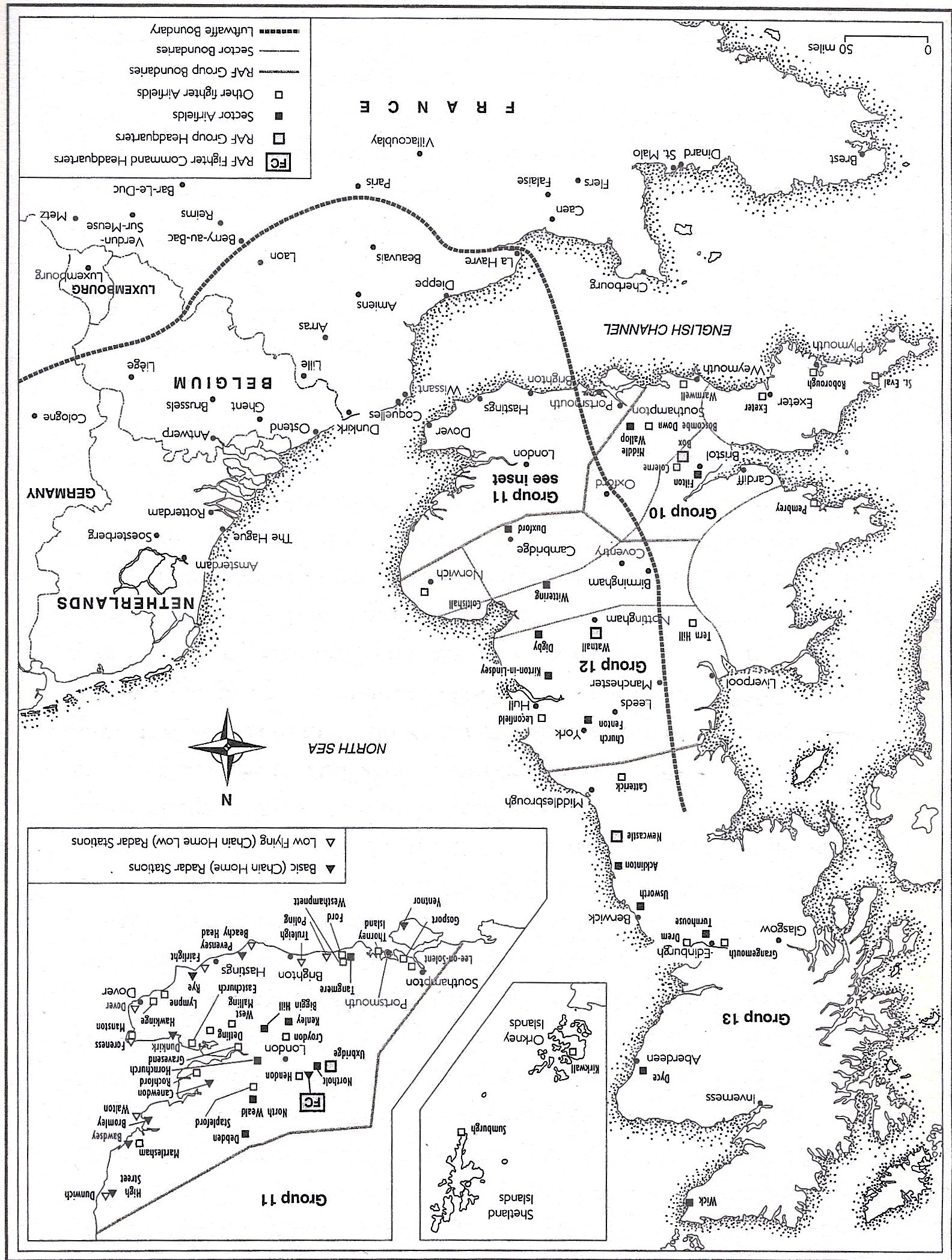
Courtesy FIGHTER BOYS Saving Britain 1940 by Patrick Bishop ©️Patrick Bishop 2003 First published 2003 by HarperCollinsPublishers London 2003. Inset map
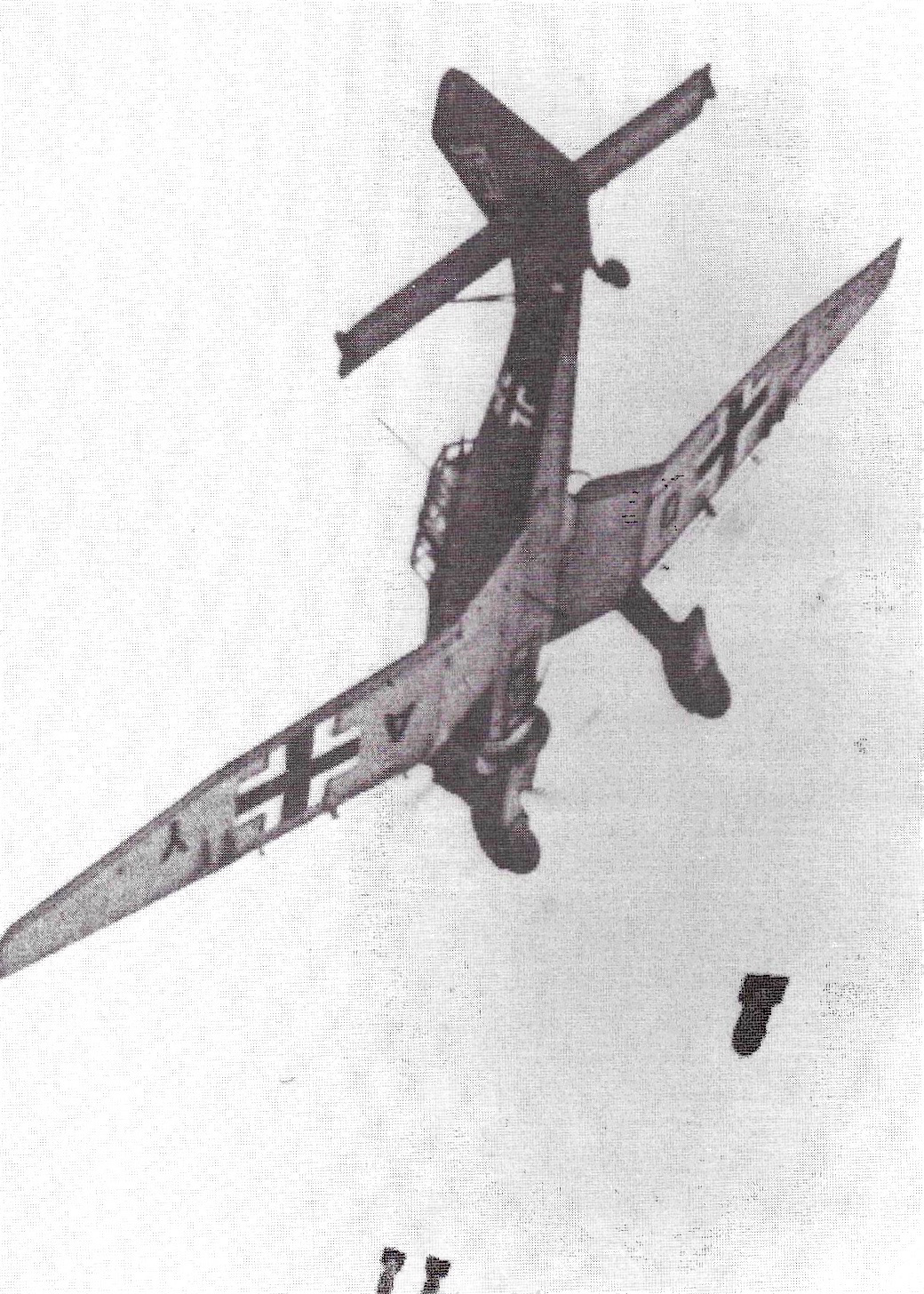
All Fighter Command Groups operated the Dowding System of Fighter Control. Radar stations intercepted raiders inbound and enabled the RAF Squadrons to be scrambled and reaching battle height very quickly and climbing to very high altitude. The tactic was to dive on the raiders from out of the Sun. Luftwaffe aircraft, such as the Heinkel 1-11e had wide open glass covered cockpits. The RAF would dive down onto the exposed crews. Another tactic which numerous battle reports in the Luftwaffe archives testify to the sheer dread of crazy pilots flying headlong towards the oncoming raider. The Luftwaffe was up until this point regarded as an invincible force. They had wrought havoc across Europe.
There is something that the invader fails to take into account, as we are seeing with the deadly drone attacks by Russia in 2026 upon Kiev and all major cities and towns in Ukraine.
Footnotes and Citations
[1] LTB Extract pages 5 – 10 Home Intelligence Reports on Britain’s Finest Hour ~ May to September 1940 Edited by Paul Addison and Jeremy A Crang
[2] I transcribe this very much with the Sovereign nation and People of Ukraine in mind who were invaded by Russia on 22 February 2022 and, to the shame of the democracies and in particular America – now presided over by a Jimmie Cagney gangster-type – who values his friendship with Vladimir Putin more than with any other person walking this earth. A retro man, vile in all his ways.
[3] Adolf Hitler’s Blitzkrieg (Lightening Strike) Invasion of France and the Low Countries including Denmark and Norway
[4] This was one of my mother’s greatest fears as an eleven year old, whose account never waivered over eighty years. When expressing her fear to her father, Dad smiled and said, ‘oh no, dear, that won’t happen here. You just listen to Mr Churchill.’ And I did!
[5] Imperial War Museum Audio Link regarding Vernon Bartlett provided herein. By embedding this audio file I Kenneth Webb agree to the terms and conditions of the IWM Non-Commercial Licence, including my use of the attribution statement specified by IWM. For this item, that is: Sound: © IWM (25197). KW
[6] ‘I can offer you nothing but blood, toil, tears and sweat.’ Winston Churchill prime minister.
[7] This reflects public wariness of BBC broadcasting which was, in 1940 perceived ~ when members of the public or Home Intelligence sensed that the BBC was taking the "fatherly," i.e. patronizing, overly didactic, or condescending approach. In 1940, with the nation under severe stress, this ‘fatherly’ approach was interpreted by some listeners as lecturing, implying the public needed managing or stern, moralistic guidance rather than straightforward, respectful information. Research also shows that people, even in 1940, were surfing the airwaves, listening to local BBC radio stations for more reliable information. In short, London-based BBC commentators sounded more like distant, condescending authority figures (‘fathers’) than like-minded people sharing the national catastrophe that was upon them. KW
[8] Irish Republic
[9] Although General Maurice Gustave Gamelin (1972-1958) had distinguished himself in the Frist World war, this did not assist him in 1940. Gamelin was appointed to command the French Army in 1935. With the declaration of War in 1939 and the arrival of the British Expeditionary Force (BEF) in France he was immediately appointed Commander in Chief of the Allied Armies. This ended with his dismissal in May 1940 during the Battle of France. The strategic choices Gamelin made left France vulnerable, failing to accept that it was possible for an offensive to be mounted through what was thought to be the impenetrable Ardenne have been extensively criticised by historians. KW
[10] Italy declared war on Great Britain on 10 June 1940. Mussolini took to heart Hitler’s warning that he would personally see that Britain’s neck would be wrung like a chicken. The new Premier, Winston Churchill, invited by the King to form a Government of National Unity on 10 May 1940, replied to Hitler in a speech to the Empire and Commonwealth and the Free World, some chicken, some neck! Mussolini calculated, quite wrongly and which eventually led to the terrifying end of both Le Duce and his Wife at the hands of the Italian People, had presumed that Dunkirk meant that Britain was finished. Dunkirk was not a victory. It was though an extraordinary snatch to safely from the jaws of hell in Operation Dynamo. The evacuation of Allied forces from Dunkirk over a nine-day period from 26 May to 4 June 1940 saw 338,226 British and Allied troops being rescued from the beaches and harbour of Dunkirk, France, after being surrounded by German forces, a significant portion (between 120,000 and 140,000) of those saved were French forces, alongside around 198,000 British soldiers. This should never be overlooked. KW
[11] It is imperative to understand that the forthcoming Battle of Britain did not mean that it was the Battle of England, as I have seen some in social media perceive, over the years. The Luftwaffe hit every part of the British Isles; the neutral Irish Free State being bombed many times in 1940 and 1941. See KW Personal Note
8 February 2026
All Rights Reserved
Liverpool and Gloucestershire
© 2026 Kenneth Thomas Webb