Places

From The Archive
Places
Chapter One
I
I’M SOMETIMES ASKED why I list certain countries in the footer of this website.
I am not a globe-trotter in the true physical sense; that, for me, tends to be in the literary sense, or, as I now find, by this website’s global outreach.
Cities and Countries mark my geographical boundary.
Liverpool is, of course, my literary home. I was born in Cheltenham in the very beautiful county of Gloucestershire. My legal work took me to Cheltenham, Gloucester, Worcester, Oxford and then Bristol; from there to Folkestone and Dover in Kent, eventually tracking northward via London and Beaconsfield and finally north to Liverpool. I remember the day a Scouser very seriously informed me that should I ever consider myself not to be Liverpudlian, then he, for one, would turn his back. That pulled me up short. For scousers have a way of making their point, not unlike Glaswegians and Tyneside. One can imagine the conversation that led to that, the conversation that followed, and my asking for, and receiving, his forgiveness. And that is not written light-heartedly! On that day, reader, I sailed very close to the Wind.
An indelible moment.
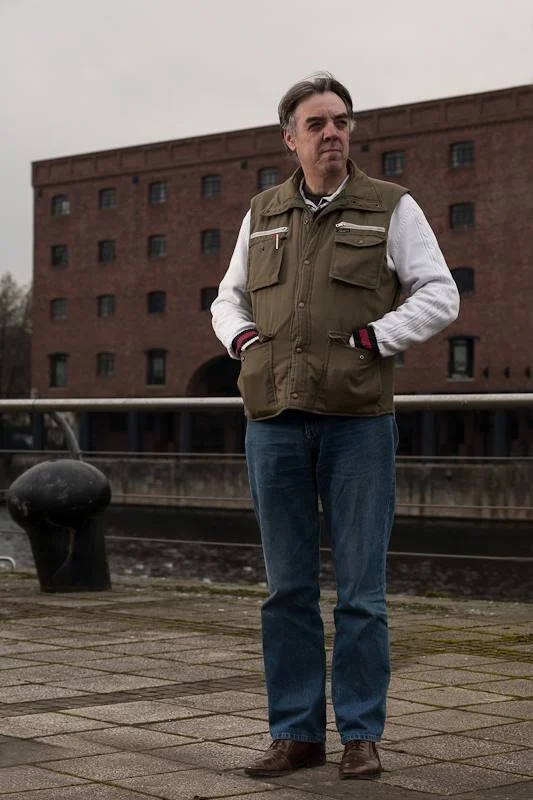
Honorary Liverpudlian
I remember the day a Scouser very seriously informed me that should I ever consider myself not to be Liverpudlian, then he, for one, would turn his back.
Thus, Liverpool is, and always will be, both my literary home and my spiritual home, for it is Liverpool that made me who I am and, moreover, unlike other places, welcomed me with open arms as very much part of a living and vibrant community within their wider city and people.
II
We reach a point in life when age comes knocking on the door. It is never welcome. My unwelcome ‘visitor’ reminded me that I was getting older, and I owed a duty also to my family down south. Slowly, over time, I rediscovered my love for the County I was both born and grew up in and lived the greater part of my life. It was always the place to which I would return, even when my legal work carried me all around England over twenty years. That in itself was exciting ~ to practise The Law of England and Wales in different regions, different counties and very different communities.
So, in 2017 it was very much a case of City Boy to Shire Lad.[i] And I have welcomed the return.
III
To walk again the parks and lanes I walked as a tot on Grandma’s hand, to cycle hell-for-leather to school, dodging cars, occasionally having to backtrack to retrieve the satchel I’d not secured well enough!
To walk again The Gallops where once I rode in saddle and stirrups, again hell-for-leather - I have this thing about racing around, not helped by my Merc’ which insists I let her have her way occasionally. However, on that, please note I’m highly disciplined these days. We live on an island that has more cameras per head of population than anywhere else, even America, we’re informed. Extraordinary. But on that note there needs to be added another point. Our police are 20,000 fewer than when my father and I were serving in the Gloucestershire Constabulary. If we had been told in the 1980s that the day would come, not long after 2008 when national government would, almost overnight, reduce our national police service by 20,000, well, quite simply we would not have believed it.
Chapter Two
I
British Policing
People bemoan that they never see a police officer these days. I myself have sometimes wondered where they are. In 1980, I was stationed in the beautiful town of Stow-on-the-Wold, the highest point in the country and where the town is known for being the first point at which the Siberian winds touch down with the arrival of Winter. That wind is like a knife. We were a very large subdivision in 1980. We operated 24/7. Furthermore, we had many villages around us. One day, the sergeant took me aside. I’d only just arrived. It went something like this.
“Ken, as well as walking the beat in Stow, you need to visit all our villages regularly. Remember, lad, to always have your helmet with you. You drive with a flat cap. But villagers don’t like seeing a flat cap. They know you’re not local. When you put your helmet on, well, believe me, you’ll be surprised. They really do welcome you as their very own village constable. Oh, and by the way, you wear your helmet with your chin strap down, lad. I don’t want any of that slovenly helmet-on-bak-ot-ed nonsense!”
Those were the days. And he was right.
Behind the wheel, and entirely due to the superb training I received at the then, No. 6 Police Driving School at Devizes in Wiltshire - another beautiful county where nestles the ancient city of Salisbury - I am very aware of fatal road accidents during my service as a constable, a proud holder of that very ancient English office. And even though those tragedies were, for me, thankfully few, their impact was emphasised by way of my father’s service as a commander in the then, Traffic Division. He attended hundreds of fatal collisions in the course of a lifetime’s police service, and made sure I knew where all the ‘fatal black-spots’ were.
I might be a good driver. I still drive to the police system of driving. But my father could leave me standing, his ability recognised throughout the Constabulary and wider Service as his was dual, both fast-traffic-limo and main road motor-cycle. And, to emphasise the point still further, when practising law in Oxfordshire, it was my unfortunate task to administer estates resulting from a road traffic collision that killed two sets of grandparents in the same car as a result of the fifth death driving into them head-on, having consumed thirteen pints of alcohol.
The Police are very much present. Like our NHS, they labour under the greatest financial constraints since the 1970s. The Gwent Constabulary in Wales demonstrates this skill and efficiency superbly. Now in its fourth series, we see the work of the Crash Detectives - police officers, and in my father’s service traffic police officers. To get a posting onto the Traffic Division was a promotion in itself. The creme-de-la-creme.
Crash Detectives can be seen on BBC iPlayer and we see their work between 2019-2023. We are looking at fatal road traffic collisions. And we see the expertise of our police officers in reconstructing the last moments leading up to impact, and the seconds immediately following impact. Our police service in the United Kingdom uses the most sophisticated technology to do this. And it does something else, too. It makes me very aware of my responsibility when I am driving my car.

My father, and his shift, answering questions from Her Majesty’s Inspectors of Constabulary. The taller of the two main road motor-cyclists I served with, as we commenced our police service on 15 September 1970 as regular cadets living at Police HQs. I love this photograph. It is how I remember my father ~ I know exactly that respectful stance, his hands clasped gently behind as he briefs the Inspector of Constabulary. The then chairman of the Police Authority in civilian dress listens, as too does the Chief Constable, and behind two divisional commanders have their own conversation. My father loved his work, once again being operational and again with the Traffic Division. This would be circa 1983 when Bamfurlong Traffic Division was a new and thriving aspect of policing. KTW
My father, and his shift, answering questions from Her Majesty’s Inspectors of Constabulary in a police force that is, today, almost unrecognisable from those days in the 1980s.
Few had any idea of the ferocity of the approach of the ‘woke wave’ that makes this image all the more poignant, for it is of a world long gone and with it, the standards we held in that police service at that time.
But that is only one side of the coin. We cannot draw comparisons between different policing eras. Contrasts, yes. Contrasts are the natural consequence of evolution. Now, our Police must deal with highly organised crime groups that are international, ruthless, lawless beneath the outward veneer of local respectability.
It is simply quite incorrect to compare and contrast the role of the constable in the 1970s-1980s to the role of the constable and the police and community support officer (PCSO) on 2025.
We must support our Police Service in every way that we can.
Chapter Two
I
World-wide, you will thus see my geographical boundaries are European and Mediterranean.
My many visits to Jerusalem have given me, whether I asked for it or not, a very different view of the sixty-six books that form the basis of my life’s foundation. This physical awareness has enabled me to take, dare I say it, the Josephian approach to those writings. I’ve said this countless times, as some will recall, that it is imperative that we read in between the lines; we go behind the fabric of simplistic text to grasp the entire scene in all three dimensions. Dig deep. And never cease to ask that simple question: WHY?
“The further you look back,
the further you can look into the future. ”
My time in Jerusalem enabled me to write a modern story Death’s Angel based upon the biblical passing over of the Angel of Death, and which is remembered each year as the Passover. Yes, it is hard-hitting, upsetting, and as one young man who modelled the covers of my printed and Kindle books for me pointed out, was not what he expected as it upset him. But I insist on confronting real life. This is brought home with brutal clarity in this the War in Ukraine and now the War in Israel and Gaza.
In Bosnia, I stood in the basement that had an uncanny and very sinister imprint about it. Empty, cold, severe, even though it was 36c (96.8F) outside. I turned to my host, the British police commander.
“I recognise this terrible place! This is that basement where the BBC filmed the Muslim corpses, all ages : women, children, men …”
He said nothing, beyond the slightest nod. We had both served together as squadron commanders in the RAF VR, and as all who have a military background will affirm, one learns an uncanny ability to communicate at an incredibly personal level without uttering a single word or making any physical show.
II
I have spent many happy times in Hamburg.
Childishly, I see it very much as my city. I love the People, the Alstersee, the grand walks along its banks, the beauty of the city.
Berlin is where I came face to face with the Holocaust in 1990 for the first time.
In the museum stood a single cattle-truck. It took some time for me to walk up the steps. Something forbade me to even think of stepping within. This was hallowed ground. Countless newsreel images triggered in my mind that I had seen since my earliest age - for my parents did not stop me seeing the Pathé Newsreels. They did not do this with my sisters. But it has taught me the importance of shielding young children and choosing at which point terrible and terrifying things should, if at all, be shown them. There are scenes I recall that, even sixty years on, can traumatise me if I allow them to take hold. And this has very much come home with the War in Ukraine, and now devastatingly so with the Israel Hamas War, and in particular the horror of 7 October 2023.
I spoke with the steward, who had remained at a respectful distance. Why is there no rope across the entrance? I do hope people do not walk in there.
I remember his quiet smile in the eyes. And his reply. No. There is no need. Exactly as you did, so they do.
And here, reader, is just one of the many dimensions about which I occasionally write. That which is beyond the here and now but, nonetheless, very present.
And this came home to me at the Yad Vashem Memorial. Yad Vashem is no museum, to be listed and ticked off as ‘done’ in the way that flippant tourists so often tend to do when they try to cram foreign cultures into their ten-day package tour holiday. Yad Vashem is The Memorial.
I have an admission. My nieces both visited Auschwitz. Young people need to. But it is the one place I know that my constitution would not now hold up.
But Berlin, like Hamburg, has many very happy memories; again the Berliners. Again, that determination summed up in the leap to freedom by Herr Conrad Schumann. It inspired me on the day he made that death-defying leap, and it inspires me now; which is why I sometimes write with deliberate provocation.
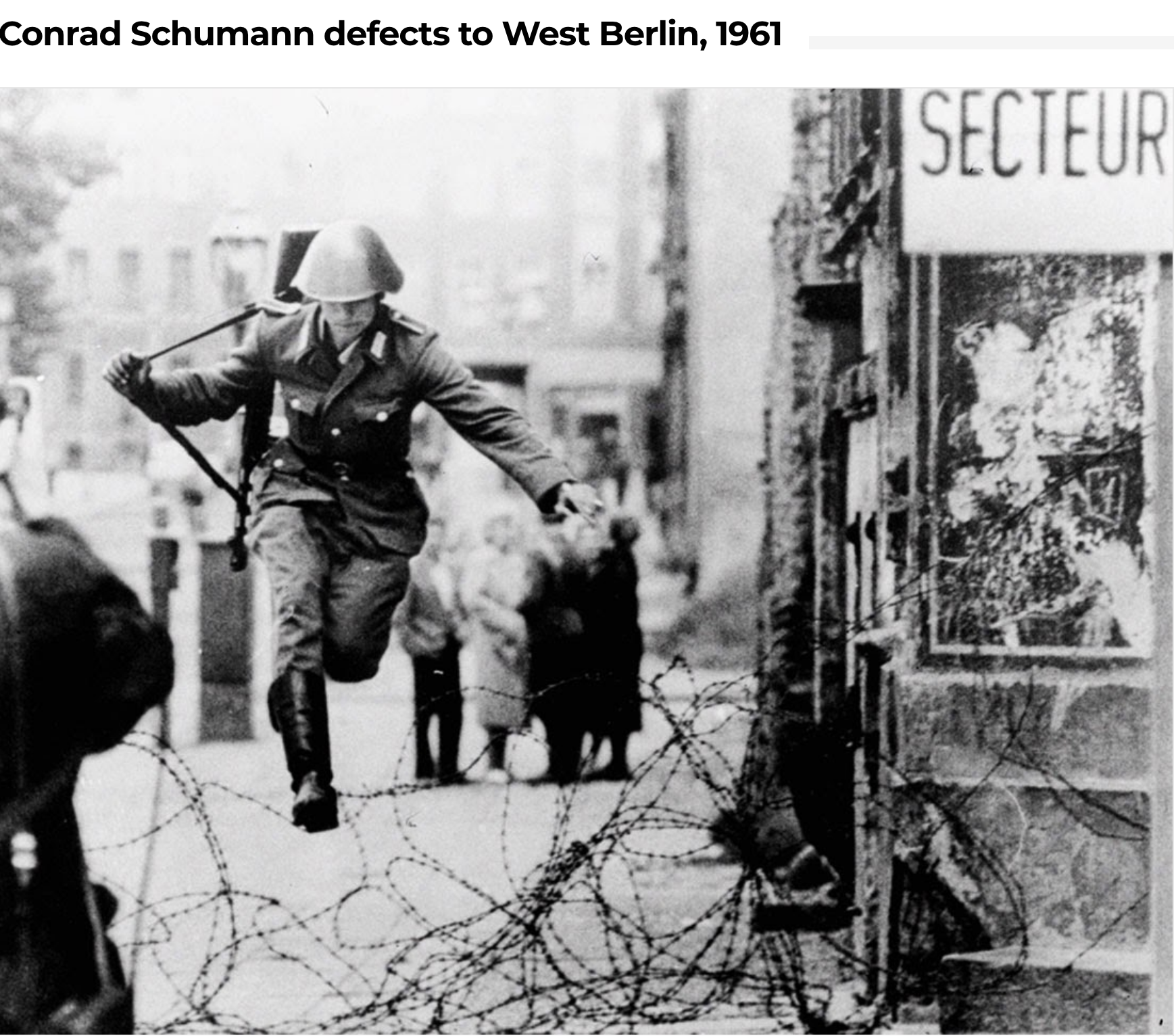
Der Sprung in die Freiheit ~ 1961 ~ die Berliner Mauer | The Leap to Freedom ~ 1961 ~ The Berlin Wall | Herr Conrad Schumann ~ Mein Held | My Hero
III
Vienna embodies that wherein this website is privileged to rest, in a country my parents made sure I visited in 1969, as, too, my elder sister in 1968.
For them, this was hugely significant, for it represented the first tangible step in rebuilding their bridge. Even as a teenager, I sensed that this was quite a deal.
You young people, to you a quarter of a century is a lifetime away, doing a Star Trek warp factor 3 into dim and distant history. But with age, that warp slows down appreciably; and at a certain point it warps back round and bites you on the bottom, and it is at that point, as you spin round, when history stares you very bluntly in the face, and will even sometimes hit you physically.
Just remember: your present is your children’s back-end of boring history, of no importance. This is the never-ending revolution, the cycle of ancestry and descent in equal measure; that which has gone before, that which approaches from ahead. Be respectful to both.
IV
As a teenager, many documentaries started appearing on TV, chronicling the Second World War. This was before virtual reality TV, so the violence we saw was real. My parents were broadminded and had paid too high a price for the past to be shoved into a box in the corner never to see the light of day. What, to me, was too far back, twice my lifetime, to them was yesterday.
I obtained a hint of this whenever the newsreels played a ranting maniac. There was one of two reactions. Either my mother would quietly walk out, or my mother would stand her ground with one non-negotiable phrase: Turn it off! I cannot stand that voice and and I cannot stand that language!
I have a German dictionary given to me by my parents when they visited Germany on their own at the turn of this century, hiring a car, and touring from north to south and north again. Mum reported with glee that Dad was in his element on the Autobahns! They met many, many German friends. And in a handwritten message on the inside cover, both expressed their hope that this gift would aid me in learning the language.
Only earlier this year, when using it to work out a phrase, did I see their note again, written by my father and counter-signed by my mother. That’s how my Dad and Mum did things. And the full import of their message was loud and clear.
“Build bridges. We did. So must you.”
Little did I know how this would come about, and this website is, in part, that story.
Chapter Three
I
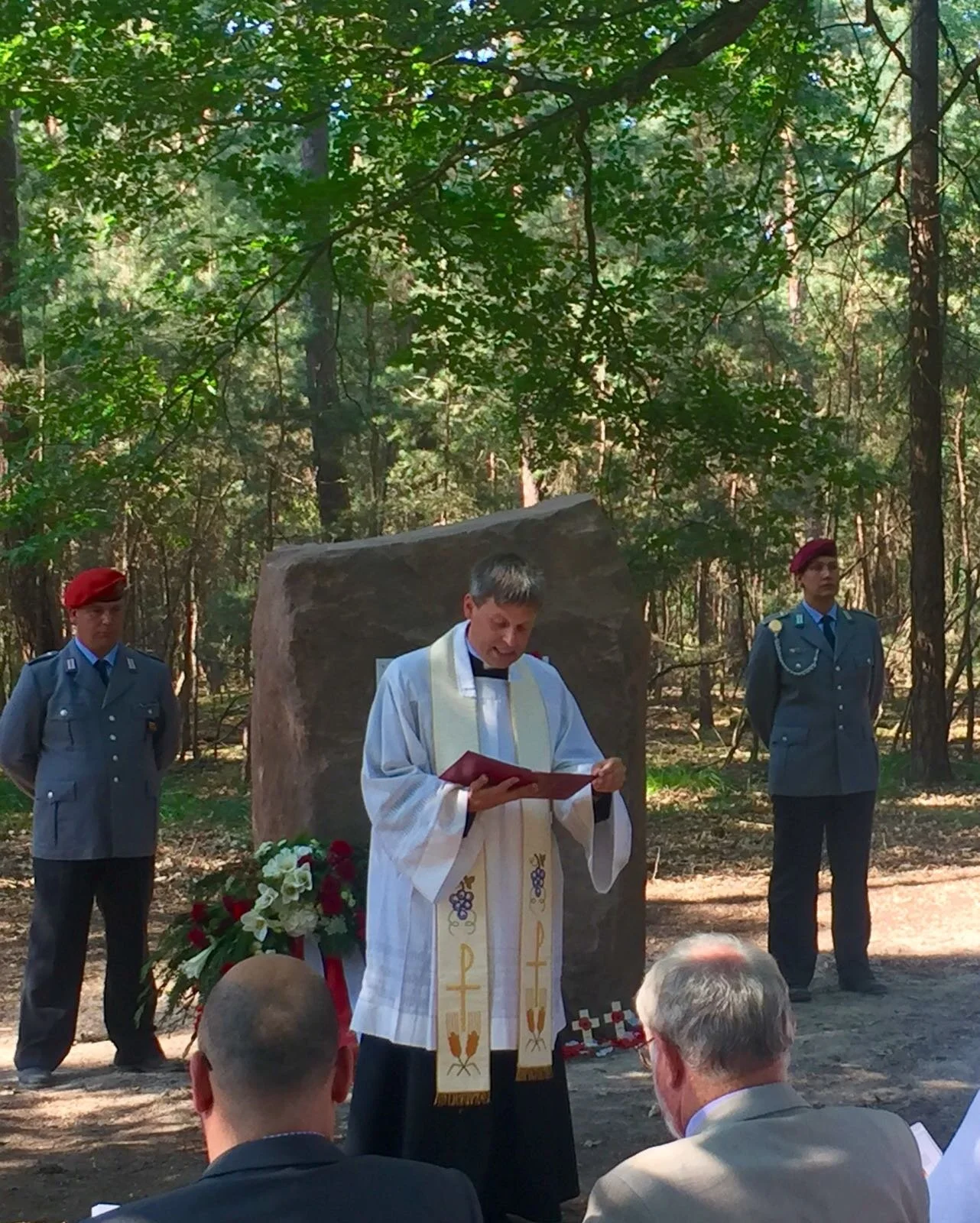
Koblenz is the very natural stepping stone from that day in the dense woodland in Lachen-Speyerdorf, where all my family with me, six other families too, and the German People, all of us, were guests of the German People and of the Ober-Burgermeister von Neustadt in der Weinstraße.[ii]
The Memorial stands for all, of all sides. My friend Rita from Koblenz - and whose work is on this website - has a place now, Rita tells me, wherein her grandfather, who was killed in action in the First World War, can now be remembered.
Here is that bridge.
We had gone full circle. Ken Webb came down to earth on a far-distant day in 1943 and seventy-five years later his brother’s son, Ken Webb, stood on the ground wherein the earlier Ken Webb’s cockpit had come to rest, the stricken Halifax’s final horrendous path through the trees still discernible when one looks up and beyond, to behind the consecrated Memorial Stone.

II
We have to rebuild and hold together.
When I first wrote this piece it was on the day that the news brought reports of yet another war, this time in Ethiopia. Just a few months ago, another friend remarked that part of her son’s family may even return there. I expressed concern, but who am I to speak, when I have so little knowledge of that region of Africa? But I counsel great caution. Their home in Canada is firmly set. Canada is a thriving democracy, firmly rooted.
Today, we have the War in Ukraine. In a one of the Ukraine Dispatches I remarked that 24 February 2022 might well be viewed by history as the opening gambit of World War Three. Nothing currently dissuades me from that view.
III
Belfast is a mere thirty minutes from Liverpool, so one can imagine I was often hopping across to the Jurys Inn. I wanted to see this famous city for myself, and to meet her people. What wonderful times I had too. Always that warm Irish welcome that is unique to the island of Ireland. And my friends, regardless of political views, taught me much, and I always return home with my batteries fully charged.
Which reminds me, as I write, of Douglas on the Isle of Mann. Just over two hours away by the Steam Packet ferry that moored up just down from my apartment, how I miss that lovely regular sailing; mooring up on the long pier at Douglas and walking along the front to my hotel, the wind in my hair, the sea air. Wonderful.
We have to think globally.
Humankind has an enormous task upon its hands.
Humankind is fitful, prone to spite and once again, entering into an era of genocide.
Humankind insists on following doctrines and whims that are as reeds in the wind, or the waves of the sea tossed to and fro, every which way. They are as chaff in the wind that, in time, will be blown from the earth.[iii]
IV
Nature, Humankind’s ally, is very sure-footed. Not prone to spitefulness, it allows itself to evolve. And if Nature folds, as it were, in on itself and closes down ‘climate’ as we know it, Nature is not too bothered because Nature will adapt.
Nature always outlasts whatever predominant ‘temporary species’ holds the planet’s sway.
There is the challenge for Humankind!
Here, again, is a reason for these place-names. Let us be all-embracing. Let us work for the common good of all, and this includes, above all, Nature, our Planet, the Multiverses we now discover, the Universe, even!
Footnotes
[i] On the Liverpool Waterfront - From City Boy to Shire Lad - to be published in 2024-2025
[ii] The Lord-Mayor of the City of Neustadt in the Wine Region
[iii] From the Psalms. There are 150 psalms, many of them written by David between 1010 - 930 BC (BCE), the latest probably being Psalm 137- a Lament - around 598-538 BC (BCE) when the Hebrews were held captive by the Babylonians (modern Iraq).
The Banner Image : Deutsche Eck in Koblenz von Holger Weinandt and courtesy of Wikipedia, of which the author is a paid subscriber and with all rights to Holger Weinandt and to Wikipedia reserved.
Here, we see the Moselle and the Rhine merge.
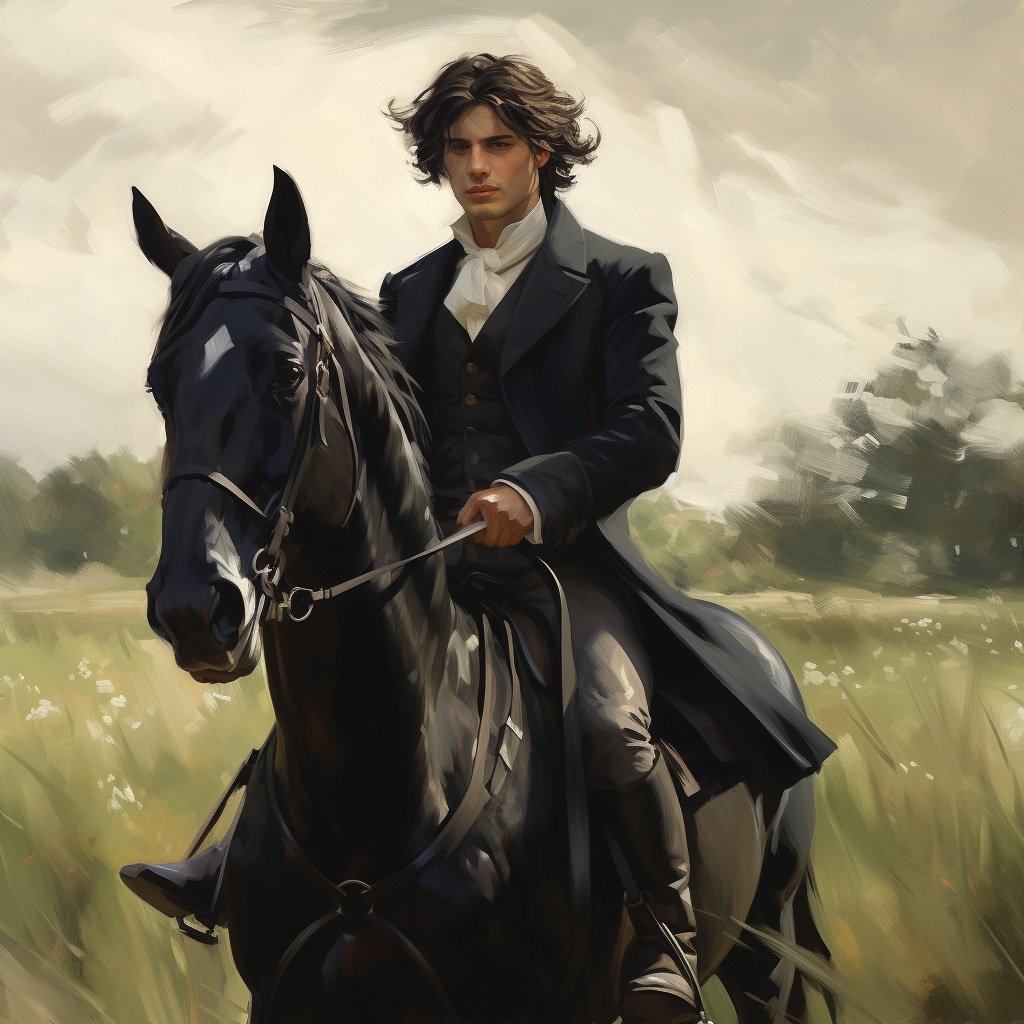
To walk again The Gallops where once I rode in saddle and stirrups…
21 October 2025
All Rights Reserved
LIVERPOOL
© 2023 Kenneth Thomas Webb
Digital Artwork by KTW unless otherwise stated
Ken Webb is a writer and proofreader. His website, kennwebb.com, showcases his work as a writer, blogger and podcaster, resting on his successive careers as a police officer, progressing to a junior lawyer in succession and trusts as a Fellow of the Institute of Legal Executives, a retired officer with the Royal Air Force Volunteer Reserve, and latterly, for three years, the owner and editor of two lifestyle magazines in Liverpool.
He also just handed over a successful two year chairmanship in Gloucestershire with Cheltenham Regency Probus.
Pandemic aside, he spends his time equally between his city, Liverpool, and the county of his birth, Gloucestershire.
In this fast-paced present age, proof-reading is essential. And this skill also occasionally leads to copy-editing writers’ manuscripts for submission to publishers and also student and post graduate dissertations.